Why does my cat lick me?
Cats lick people to show affection, share scent, ask for attention or settle themselves. Here are 7 reasons, plus the signs that licking is too much.
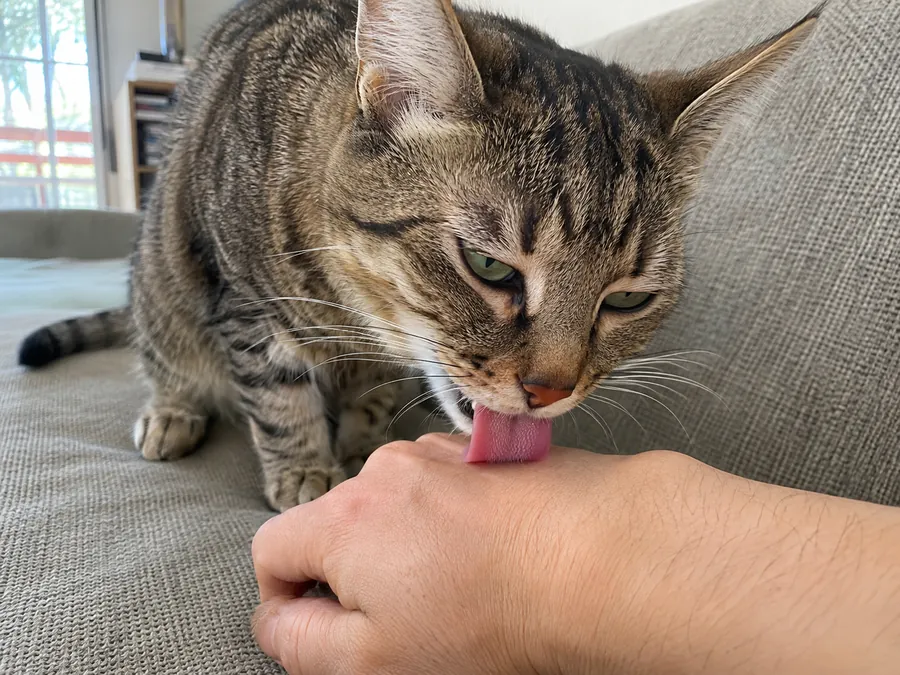
Most of the time, a cat licks you because it feels at ease with you. Licking is how cats groom the cats they are bonded to, so being licked is usually a compliment. Other reasons include a taste they like, a bid for attention, and self-soothing.
This article covers seven common reasons, how to tell them apart, and when licking is a sign to check in with your vet.
Seven reasons your cat licks you
1. You are part of the family
In cat colonies, grooming a partner is called allogrooming. Researchers who studied a free-ranging colony noted that licking was the most frequently recorded interactive behavior there, and that cats do not behave socially at random. Grooming is tied to relationships. When your cat grooms your arm or hand, it is treating you a bit like one of its own.
Cats do not do this with just anyone. A cat that licks you is usually a cat that feels settled in your company.
2. They are sharing scent
Cats read the world through smell. Licking and rubbing mix your scent with theirs, which helps make a shared “family smell.” You will often see licking paired with head rubs, a tail held upright and slow, relaxed blinking. If that sounds like your cat, see why cats headbutt you for the other half of the same greeting.
3. You taste interesting
Skin carries salt, and lotion, soap or the food you just ate can leave something tasty on your hands. A cat that licks you right after you cook, or after a workout, may just be interested in what is on your skin. This kind of licking is usually brief and focused on one spot.
4. They want your attention
Cats are quick to learn what gets a reaction. If licking makes you look up, talk or pet them, they will repeat it. This is especially common when a cat has been alone for a few hours, or when dinner is close. Cats enjoy social contact with people, and some will be quite vocal or pushy about asking for it.
Notice the pattern. Licking at 5 a.m. or near the food bowl is probably a request.
5. They are asking to play, or saying “enough”
Licking can slide into play biting. A cat with forward ears and bright eyes that licks and then nips is often inviting you to play. A cat that licks and then twitches its tail or flattens its ears may be telling you it has had enough petting. If a lick-and-bite combination happens a lot, why a cat bites you then licks you goes deeper.
6. It calms them down
Licking can settle a cat in the same way that fidgeting calms a person. A cat may lick you while kneading or purring, or when something in the house has changed. Occasional soothing licks are normal. The question is whether they are occasional.
7. Something is bothering them
Excessive licking can point to stress or discomfort. Cornell’s Feline Health Center says that if your cat’s licking seems excessive in frequency or duration, you should not ignore it, and that licking that leads to hair loss or lots of hairballs is considered abnormal. International Cat Care adds that stress is a known factor, and that pain from urinary problems or arthritis can lead to over-grooming of the sore area.
How to tell which reason it is
The same lick can mean different things, so look at the circumstances rather than the lick itself.
- When does it happen? Licking at dawn or near mealtimes is often a request. Licking while you are both relaxed on the sofa is usually bonding.
- Where on your body? Hands and arms are the usual targets. A cat that goes for your face or hair is often deepening the scent exchange.
- What does the rest of the cat say? Soft eyes, a loose body and a tail that is relaxed or upright point to comfort. A twitching tail, flattened ears or sudden stillness suggest the cat is tense.
- How long does it last? A few licks and done is normal. Licking that goes on and on, or that your cat cannot be distracted from, is the pattern to take seriously.
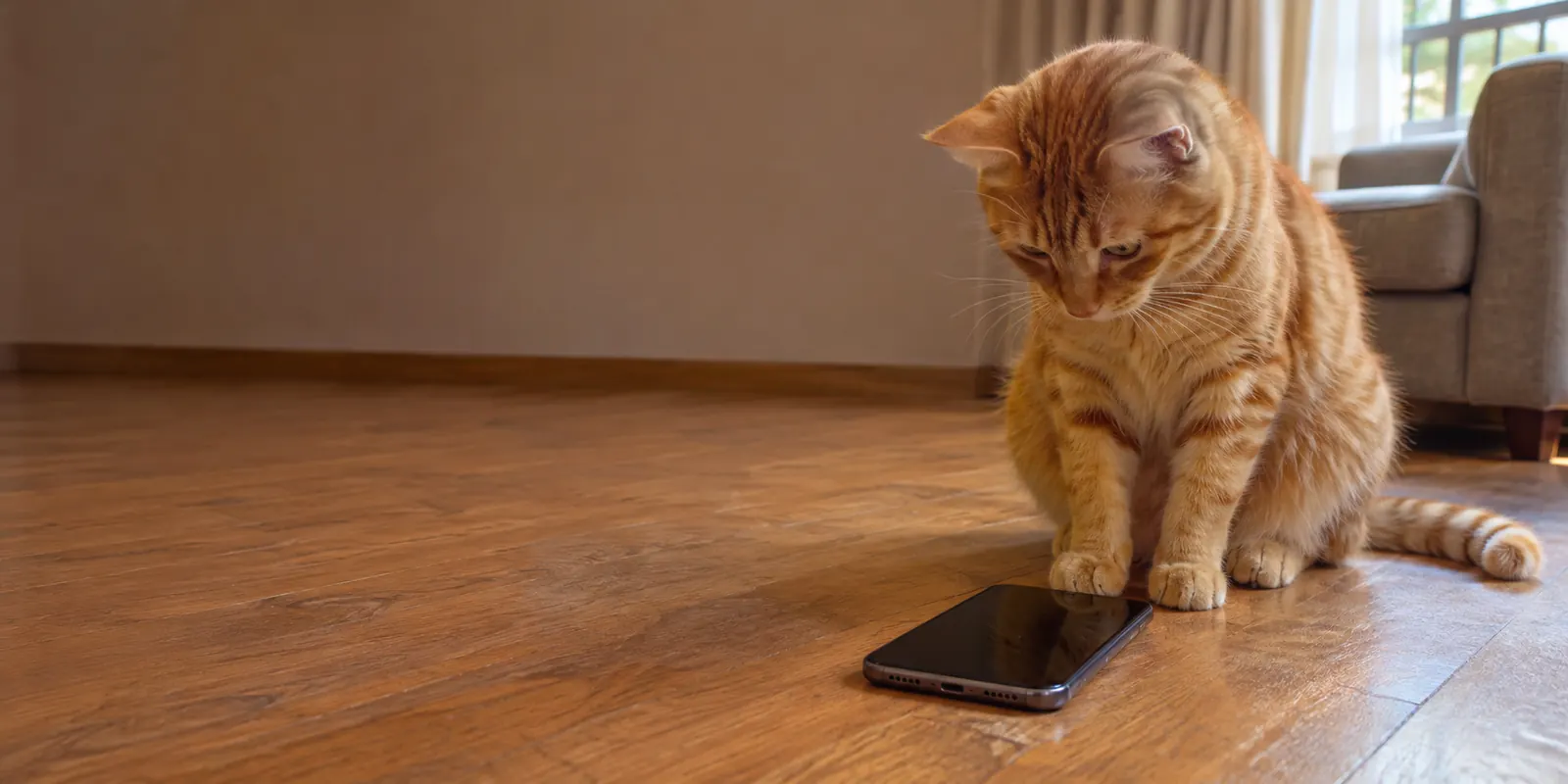
If you keep a quick note on your phone for a week, patterns usually jump out.
Why it feels so rough
If you have ever been licked by a cat, you know it feels like sandpaper. International Cat Care explains that a cat’s tongue is covered with hook-shaped barbs that face backwards, which work like an inbuilt comb for the cat’s own coat. On human skin they can feel scratchy, and a long session on one patch of skin can leave it a bit red. If that bothers you, gently move your arm away and offer a toy instead of letting the licking continue.
It is also worth knowing that cats lick things for reasons that have nothing to do with you. They groom themselves often, and licking can be part of a relaxed wind-down. If your cat licks you and then grooms itself, that may simply be tidying up after a nice moment together.
What to do about licking
If you enjoy it, there is nothing to fix. If you would rather your cat stop, try these steps:
- Redirect quietly. Stand up calmly or offer a toy or scratching post instead of pulling away sharply.
- Reward the alternatives. Praise or pet when your cat sits beside you without licking.
- Add play. A short play session with a wand toy before meals and before bed uses up energy that sometimes turns into licking. A free laser game in your browser works for some cats if you are not able to play with a wand.
- Skip punishment. Yelling or flicking your cat teaches it to be wary of you and does not explain what you want.
- Check your products. Do not let your cat lick lotions, creams or medicated products that were put on your skin, because some are not safe for cats to swallow.
Learning your cat’s usual pattern matters most. Licking that is calm, brief and mostly happens when you are relaxed together is normal.
When to call your vet
Contact your veterinarian if you notice:
- Licking that is new, constant or hard to interrupt
- Bald patches, sore or red skin, or fur that looks chewed
- A cat that licks one spot over and over, or seems to be in pain when you touch it
- Licking along with changes in appetite, litter box habits, hiding or mood
- Frequent hairballs or vomiting
Your vet will usually look for a physical cause first before treating it as a stress or behavior issue. You can help by noting when the licking happens and for how long.
Sources
- Vitale (2022) — The Social Lives of Free-Ranging Cats, PubMed Central
- Cornell Feline Health Center — Cats that Lick Too Much
- International Cat Care — Over-grooming in cats
- International Cat Care — Cat communication
- ASPCA — Meowing and Yowling
- International Cat Care — Why do cats..?
Cat Translator is an entertainment app. This article is general information, not veterinary advice. If your cat's behavior changes suddenly, talk to your vet.