Why does my cat follow me everywhere?
Cats follow their people out of attachment, routine, curiosity or hunger. Here are 7 reasons, what the bathroom habit means, and when it is a concern.
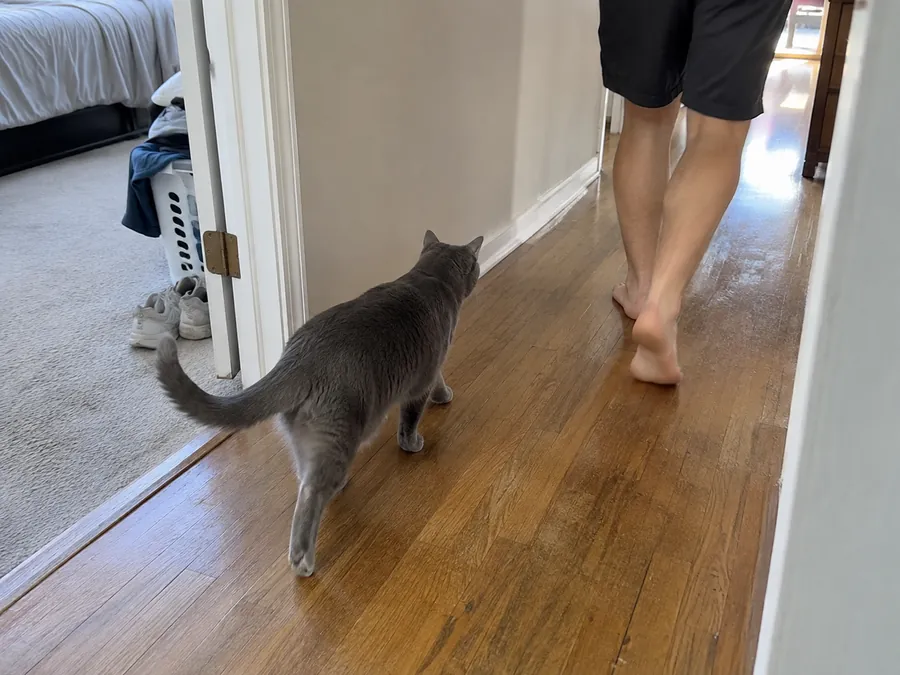
A cat that follows you from room to room is usually showing that it likes your company and wants to be part of what you are doing. Other common reasons are routine (it knows what happens next), curiosity, hunger and boredom. It is normal behavior for most cats, and it is rarely a problem unless it comes with distress.
Below are seven reasons, what each looks like, and how to respond.
Seven reasons your cat follows you
1. You are their favorite person
Cats are more social than their reputation suggests. The ASPCA says cats enjoy social contact with people. A cat that trots behind you, tail held high, is greeting and keeping close. International Cat Care describes the “tail up” position as a friendly signal, and says a cat rubbing around your legs is greeting you as it would another cat in its social group.
2. They know your routine
Cats learn schedules and the signals that go with them. The alarm clock, the shower, the sound of your keys and the move toward the kitchen all mean something. A cat that follows you from bed to bathroom to kitchen is walking through a pattern it expects to end with breakfast.
3. They are hungry or want something
If following turns into meowing, circling at your feet or leading you to the bowl, your cat is asking for food. The same goes for a closed door or a water bowl that needs refreshing. Check the situation before you assume it is just affection.
4. They are curious
Your activities are good entertainment. Opening cupboards, carrying laundry and running water all make interesting sights and sounds. Many cats follow to see what you will do and then settle nearby to watch.
5. They want to play or be around you
Cats who are left alone for long periods each day may be more likely to seek attention when you are home. In studies of cats and their owners, researchers describe interactions as shaped by both the cat and the person, with the cat often deciding how long a session lasts. That means your cat is choosing you on purpose. Short, regular play sessions with toys that mimic prey are one way to give your cat the interaction it is after. A few minutes on the free browser game for cats can also help when you have a work call coming up.
6. They feel safer with you around
In a new home, after a move, or when something loud is happening, a cat may stay close for security. This is more likely if the following is new. A cat that is calm and relaxed is following for fun, while one that is tense or hiding when you leave is asking for reassurance.
7. They are a high-contact cat by nature
Some cats are simply more people-oriented than others. Personality, early handling as a kitten and breed tendencies all play a part. If your cat is also sleeping on you and rubbing against you often, read why cats can be clingy for how to tell affection from anxiety.
Following or clinginess?
Following on its own is a social habit. Clinginess is when your cat cannot settle without you. The difference shows up in how your cat acts when you stop moving.
- Follower. Trails you, then lies down in the same room, eats and plays normally, and is fine when you leave for work.
- Clingy. Cries at doors, will not eat when you are out of sight, paces or hides when you leave, or follows you with a tense body.
If your cat falls in the second group, read why cats get clingy and consider whether anything changed at home, such as a move, a new schedule or a new pet. Gradual changes, a predictable routine and enrichment while you are out usually help.
Why do they follow you to the bathroom?
It is small, quiet and warm, you are sitting still, and the door is a barrier, which cats find fascinating. Your cat may also have learned that waiting at the door means you will reappear. It is a common habit and harmless.
If the door is closed and your cat scratches or cries, that is a request for access. Keeping it open for a short time can settle things, and so can a cozy spot just outside.
What to do
- Welcome it, within reason. Do not shoo a calm follower away. Just keep walkways clear so you do not trip.
- Schedule play. Two short sessions a day, one before meals, tends to reduce pestering.
- Provide perches. A window seat or cat tree in the room where you spend the most time gives your cat a place to be near you without being underfoot.
- Keep arrivals and departures calm. Dramatic goodbyes can make some cats more anxious.
- Do not reward demands. If following turns to loud meowing, wait for a quiet moment before feeding or petting.
For more on how cats show affection, see how to tell if your cat is happy.
Kittens, adult cats and seniors
Age changes the picture. Kittens follow because everything is new and you are the safest, most interesting thing around. They often shadow you for weeks after coming home, and that usually eases as they gain confidence.
Adult cats follow out of habit and affection, and the pattern is mostly steady from year to year. A senior cat that starts to follow you more than usual may be seeking comfort, may be a little less sure of its surroundings, or may simply want help reaching a favorite spot. Offer easy steps to the sofa, keep food and water in the same places, and notice whether the new behavior comes with other changes. If it does, mention it at your next vet visit.
In homes with more than one cat, one cat may follow you while another prefers to watch from across the room. Both are normal. Spend a little one-on-one time with each cat so no one has to compete for it.
When to call your vet
Following is not a health problem by itself. A change is. Talk to your vet if:
- Your cat has suddenly become much clingier, or much less so
- Following comes with crying, restlessness or panting
- You see changes in appetite, drinking, weight or litter box use
- Your cat seems disoriented or cries at night, especially if it is older
The ASPCA advises that a cat who meows a lot should be checked thoroughly by a veterinarian, because a medical cause needs to be ruled out. Noting when the behavior changed will help your vet.
Sources
- ASPCA — Meowing and Yowling
- The Mechanics of Social Interactions Between Cats and Their Owners — PubMed Central
- International Cat Care — Why do cats..?
- International Cat Care — Cat communication
- International Cat Care — Cat Friendly Interaction
Cat Translator is an entertainment app. This article is general information, not veterinary advice. If your cat's behavior changes suddenly, talk to your vet.