
Cat Translator blog
Cat behavior blog why cats do what they do
Plain answers to the questions cat owners ask most, from licking and late-night meowing to body language, play and training.
Cat behavior
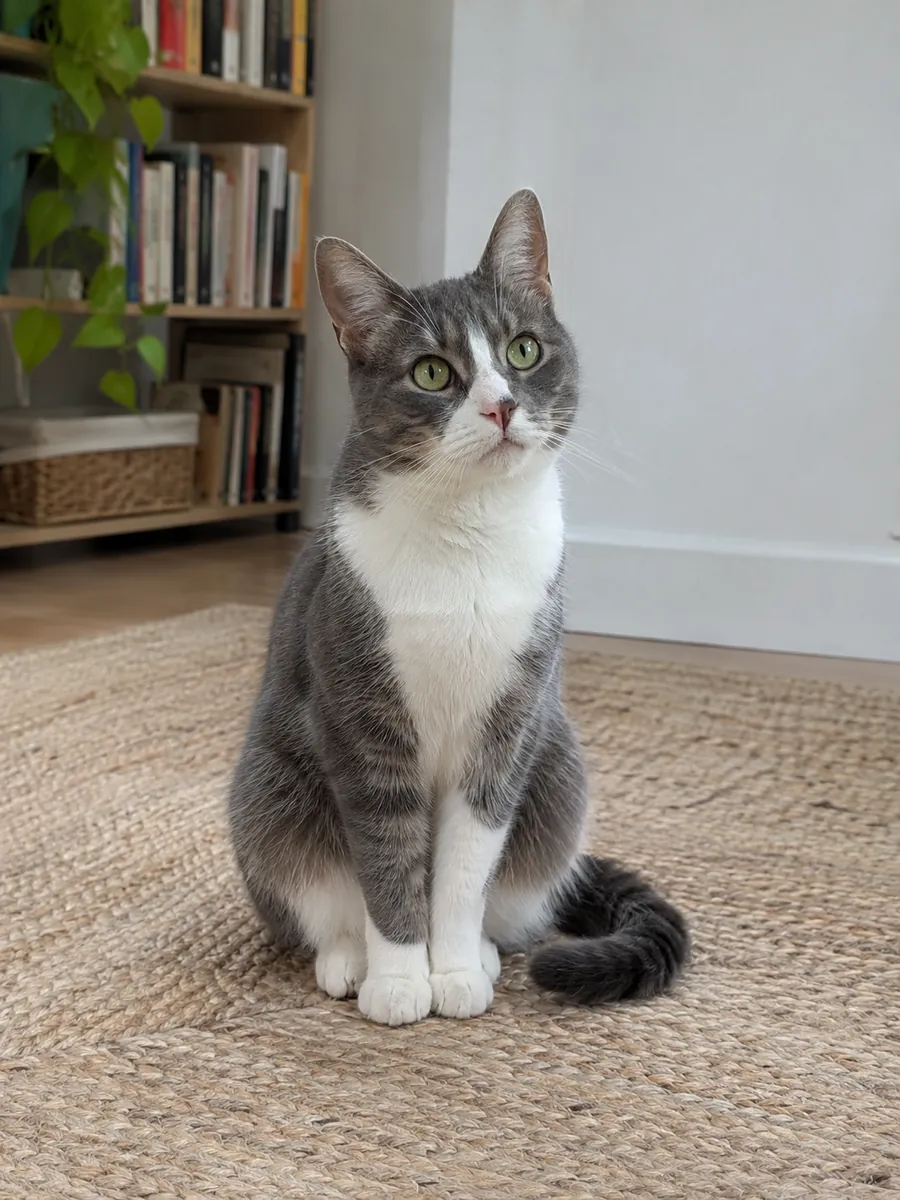
Why cats lick, stare, knead, follow you around and sleep on your chest.
-
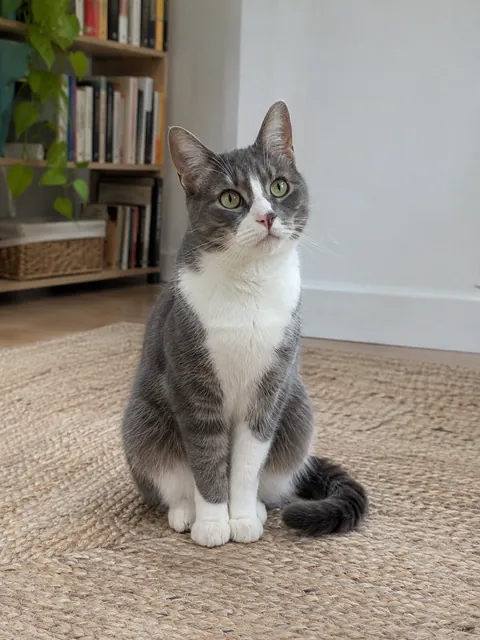 Why does my cat bite me then lick me?
A bite followed by a lick is usually play, overstimulation or a mixed signal, not spite. Learn how to read the difference and what to do next.
-
 Why does my cat bite me when I pet her?
Cats often bite during petting because it becomes unpleasant, not out of nowhere. Learn the warning signs, the causes, and how to pet without getting bitten.
-
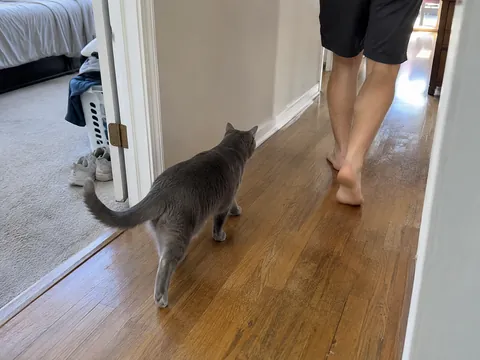 Why does my cat follow me everywhere?
Cats follow their people out of attachment, routine, curiosity or hunger. Here are 7 reasons, what the bathroom habit means, and when it is a concern.
-
 Why does my cat headbutt me?
A cat headbutt, or bunt, is a friendly greeting that spreads scent and shows comfort. Learn why cats do it, what the variations mean and how to reply.
-
 Why does my cat knead?
Kneading is a kitten habit that grown cats keep for comfort, scent and contentment. Learn what it means, why they do it on you, and how to save your skin.
-
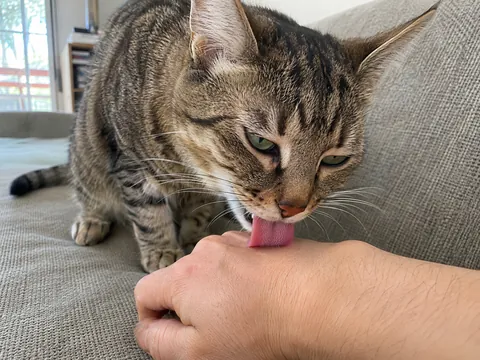 Why does my cat lick me?
Cats lick people to show affection, share scent, ask for attention or settle themselves. Here are 7 reasons, plus the signs that licking is too much.
-
 Why does my cat purr so much?
Most purring means a relaxed, content cat, but cats also purr when stressed, hungry or in pain. Learn how to read the purr and when to call your vet.
-
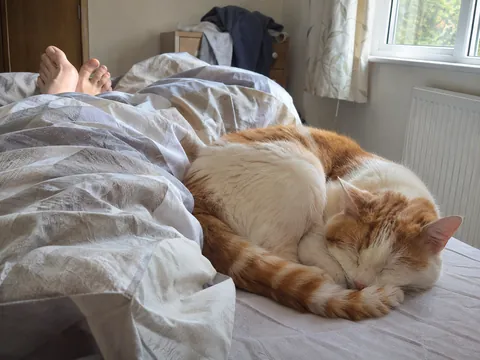 Why does my cat sleep at my feet?
Cats sleep at your feet for warmth, safety and closeness without crowding you. Here is what the spot means and when a change is worth a closer look.
-
 Why does my cat sleep on my chest?
A cat who sleeps on your chest is usually after warmth, safety and closeness. Learn what else is going on, and how to handle it when it is too much.
-
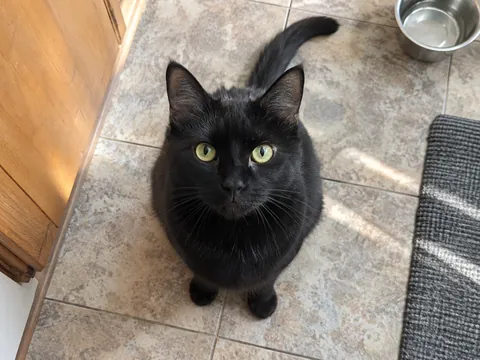 Why does my cat stare at me?
A cat's stare can mean comfort, a request for food or play, curiosity or unease. Learn how to read the gaze, and what the slow blink really says.
-
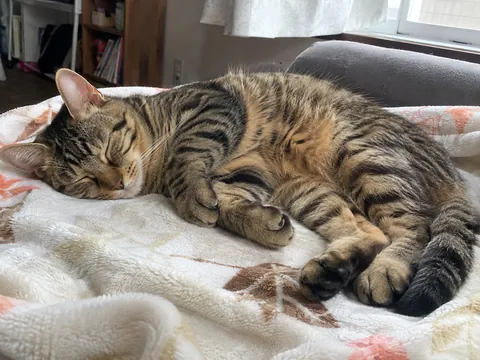 Why does my cat twitch in her sleep?
Most sleep twitching in cats is normal REM sleep, and brief, relaxed movement is nothing to worry about. Here is how to tell it from a seizure.
-
 Why is my cat so clingy?
A clingy cat may be bored, stressed, bonded to you, or sometimes unwell. Learn the common reasons, what helps, and when a sudden change needs a vet.
Meows & cat sounds
What all that meowing, yowling and chirping is about, and how to answer.
-
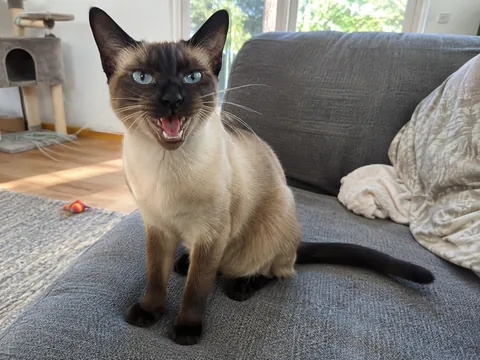 Cat meow meanings: what your cat is saying
Cat meow meanings explained: why cats meow, what greeting, food, chirp, yowl, purr, hiss and growl usually signal, and when a change in voice needs a vet.
-
 Why did my cat stop meowing?
 Often it is a change in routine or personality, but a quieter or changed voice can also signal illness. Here is how to tell.
-
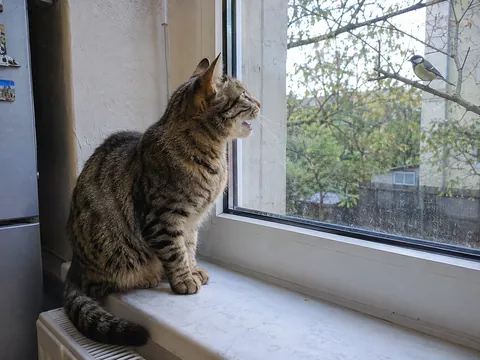 Why does my cat chirp at me?
 Chirps and trills are usually friendly greetings or excitement, and sometimes a request. Learn how chirping differs from chatter.
-
 Why does my cat meow at me?
 Adult cats mostly meow at people, not other cats, to greet, ask for food or attention, or flag a problem. Here is how to read it.
-
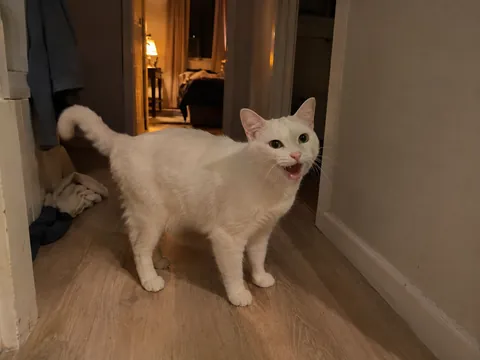 Why does my cat meow at night?
 Cats are most active at dawn and dusk, and boredom, hunger, age and health problems can add to it. Here is what helps.
-
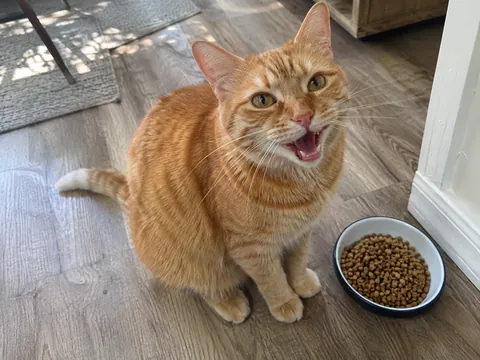 Why is my cat meowing so much?
 Hunger, attention, boredom, heat cycles, age and health problems are the usual causes. Here is how to tell which one it is.
-
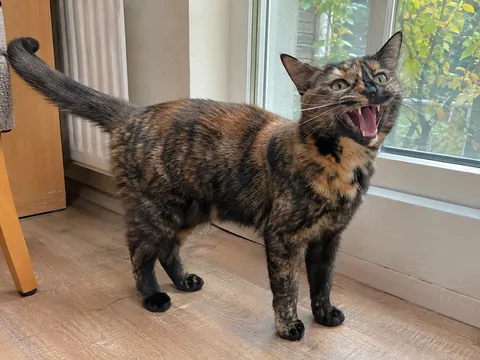 Why is my cat yowling?
 Heat cycles, stress, pain, aging and illness can all cause that long, loud cry. Learn how to tell them apart and when to see a vet.
Body language & mood
Read your cat's tail, ears, eyes and posture.
-
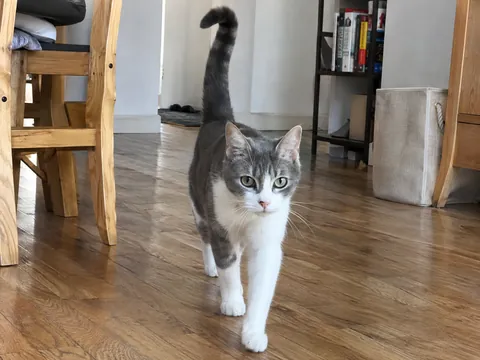 Cat body language: how to read your cat
Learn to read cat body language: what ears, eyes, tail, whiskers, posture and sounds mean, how to combine the signals, and when to give your cat space.
-
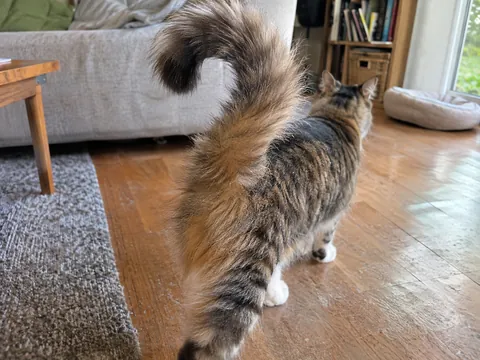 Cat tail language: what your cat's tail is saying
Cat tail language explained: what an upright, curled, puffed, tucked, quivering or swishing tail means, and how to read the tail with ears and posture.
-
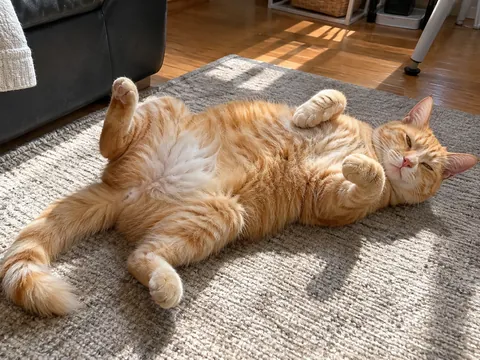 How to tell if your cat is happy
: nine signs, from tail up and slow blinks to purring, kneading and relaxed ears, plus signs that your cat is not content.
-
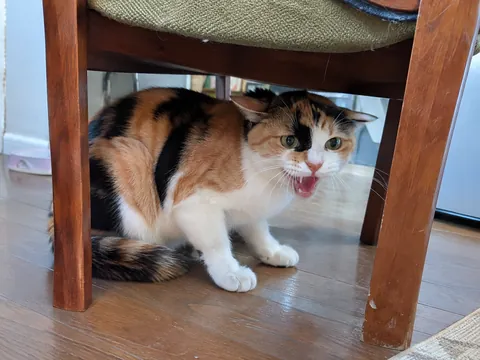 Why does my cat hiss at me?
 A hiss is a warning from a scared, stressed or sore cat. Learn the common causes, what to do in the moment, and when to see a vet.
Games & play
Play ideas and screen games your cat will chase.
-
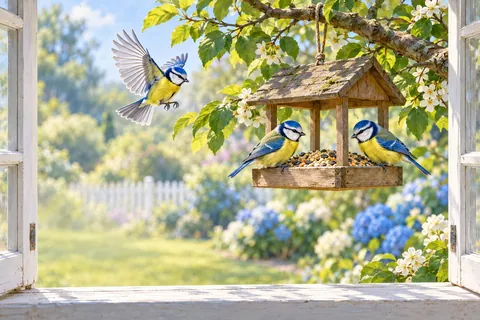 Bird games for cats: why they work and how to set them up safely
Why do cats chatter and freeze at birds on screen? Learn how flying prey triggers hunting instincts and how to set up bird games and cat TV safely.
-
 Fish games for cats: why they work and how to play safely
Fish games hold many cats' attention because darting movement sets off hunting instincts. Here is why, how to set up screen play safely, and how to end it.
-
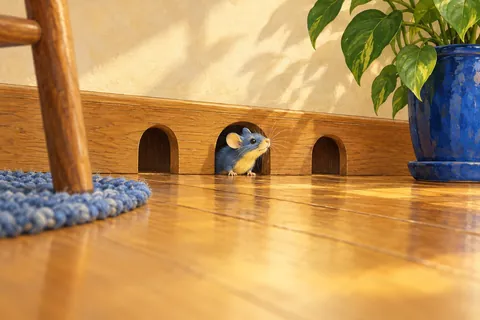 Mouse games for cats: why they work and how to play safely
Mouse games tap a cat's strongest hunting instinct. See why scurrying prey is so gripping, how to set up screen play safely and how to end with a real catch.
-
 My cat is bored: signs and what to do about it
Unsure whether your cat is bored? See the common signs, why indoor cats get restless, and simple daily ways to entertain a cat that actually work.
-
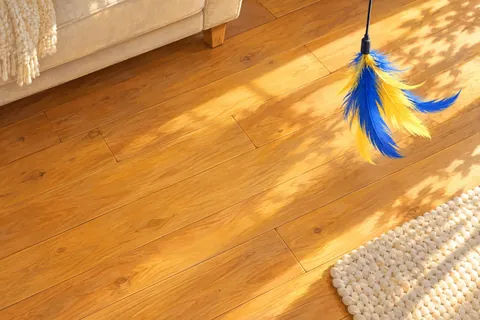 String games for cats: why feathers and strings work and how to play safely
Feather and string games copy flying and darting prey. Learn why cats love them, how to play with a wand safely, and how screen play can warm up the hunt.
Training
Gentle, reward-based training that works with how cats learn.
-
How to litter train a kitten
How to litter train a kitten: pick a low-sided uncovered box, use clumping unscented litter, set up a small room and clean accidents calmly. Step by step.
-
 How to train a cat
Yes, cats can be trained. Learn how to train a cat with tiny treats, a clicker or marker word, and short sessions, plus easy first behaviors to teach.
-
 How to train a cat not to scratch furniture
Scratching is normal, so redirect it. Learn how to train a cat not to scratch furniture with the right posts, smart placement, covers and calm rewards.
Fun cat facts
Ages, breeds and the questions cat owners love to ask.
-
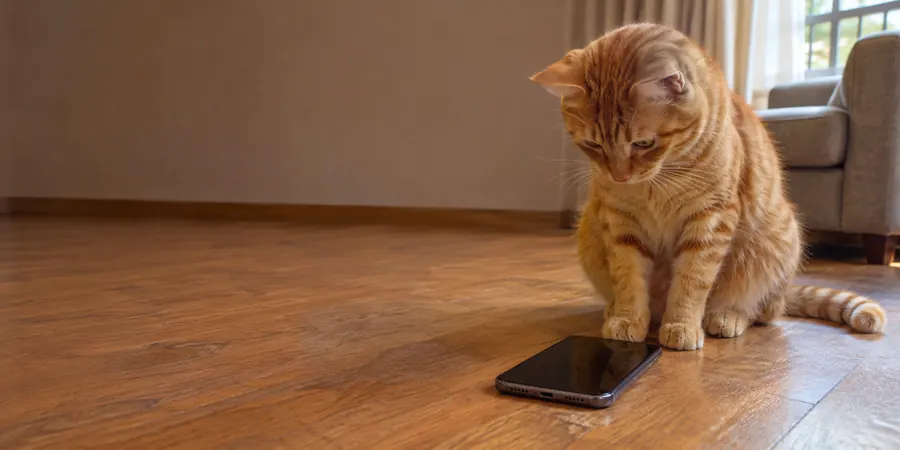 Do cat translators work?
 No app can know exactly what a cat means. See what research says about meows and how to use translator apps for fun.
-
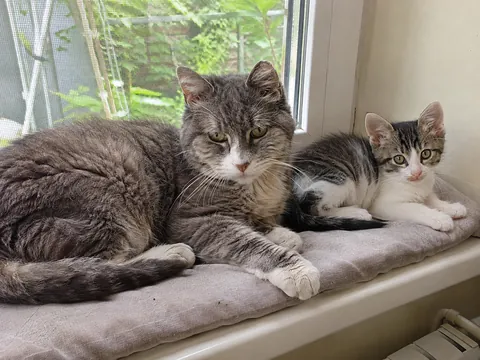 How old is my cat in human years?
How old is your cat in human years? See a cat age chart from International Cat Care, the simple rule behind it and what each life stage means for care.
-
How to talk to your cat (so she actually responds)
Cats mostly talk with body language, but you can talk back. Learn how to use slow blinks, a friendly chirrup, your voice and their name to bond with your cat.
-
What breed is my cat?
Not sure what breed your cat is? Most cats are domestic shorthair or longhair mixes. Learn how to read coat pattern, body shape and face clues for hints.
Your cat has a lot to say
Record a meow, answer in meows, then let your cat play.

On a computer? Scan with your phone camera. iPhone opens the App Store, Android shows what's coming.