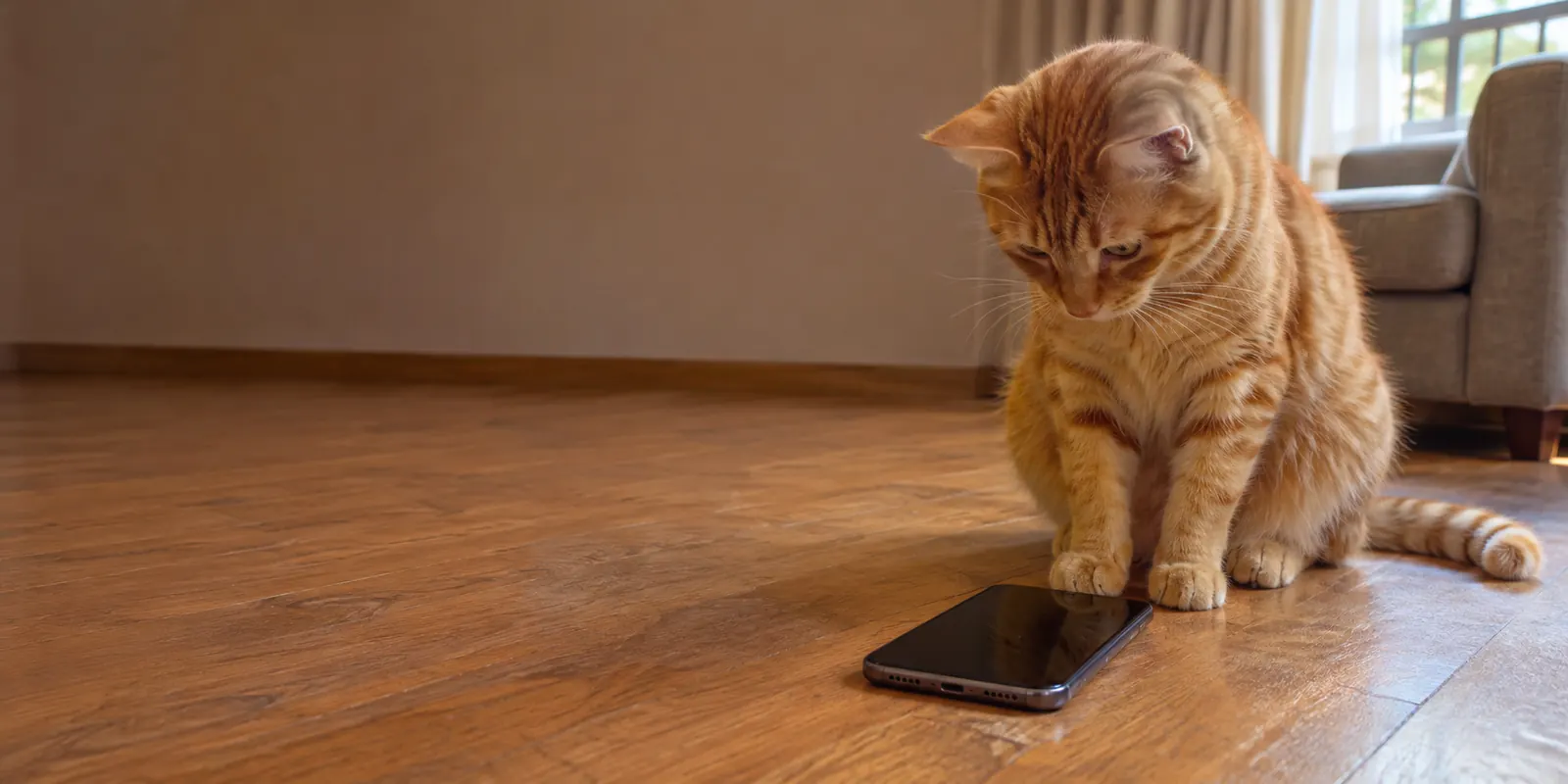
How to tell if your cat is happy
How to tell if your cat is happy: nine signs, from tail up and slow blinks to purring, kneading and relaxed ears, plus signs that your cat is not content.
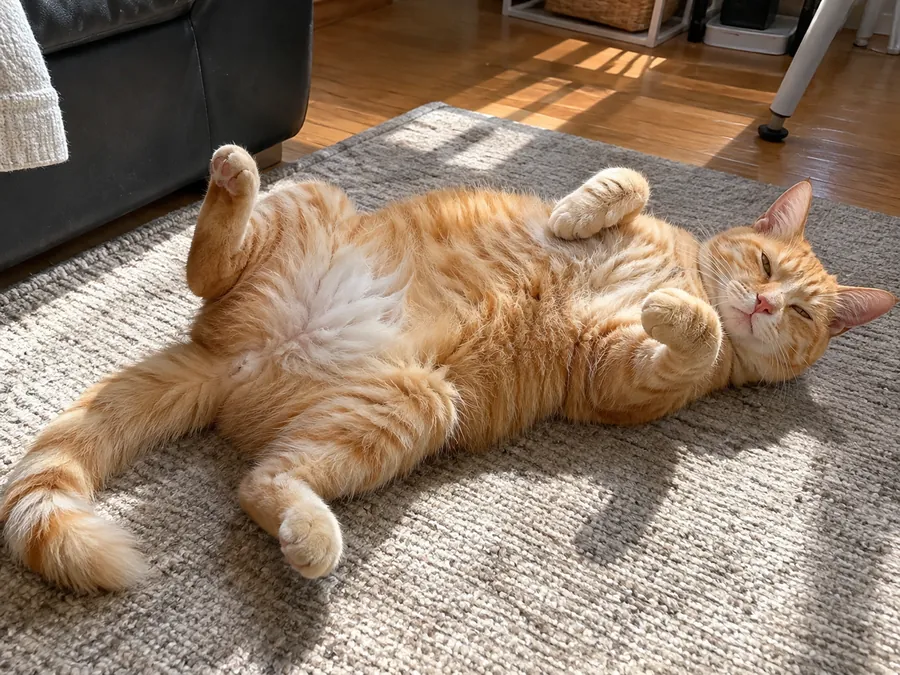
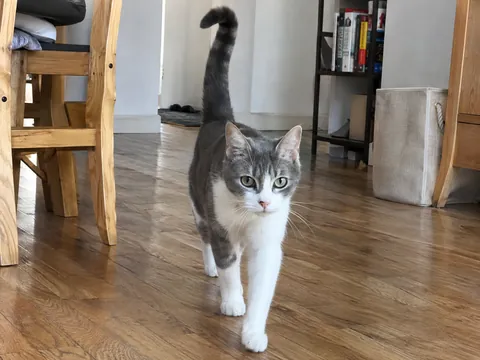
A happy cat looks relaxed: loose body, smooth fur, soft or slowly blinking eyes, a tail held up (often with a curl at the tip) and ears in their natural forward position. It may purr, knead, rub against you or roll over to show its belly, all while moving around the house with confidence.
Here are nine signs of a content cat, then the signs that suggest something is off and what to do about it.
Signs in the body
1. A relaxed body and smooth fur
The RSPCA describes a happy cat as having a relaxed body posture, smooth fur and soft eyes. The cat looks loose rather than coiled. It may lie stretched out, or sit with its paws tucked under its chest and its body weight settled.
A tense, crouched body or fur standing on end points the other way. Our guide to cat body language shows how to compare the two.
2. Slow blinks and soft eyes
If your cat looks at you and slowly closes and opens its eyes, that is a slow blink, which Cats Protection says shows relaxation. You can slow-blink back to say you are relaxed too. International Cat Care also lists relaxed eyes with blinking and winking, sometimes half-closed, as a sign of a comfortable cat.
Wide, fixed eyes with little blinking are a different message and often mean tension.
3. Tail up, with a curl at the tip
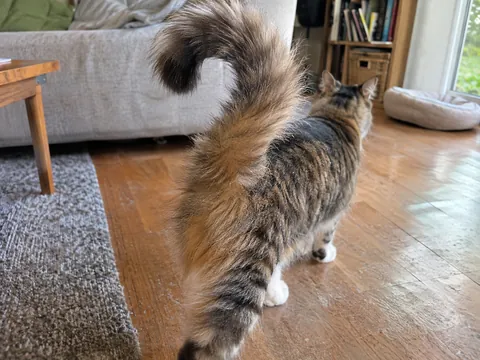
A cat that approaches you with its tail up in the air and a slight curve at the tip is happy to see you, according to Cats Protection. A tail wrapped around you is a sign of affection. The full list of tail positions is in our guide to cat tail language.
4. Ears in the natural position
International Cat Care says relaxed cats tend to have their ears facing forward in the normal position. The RSPCA also describes happy cats as having ears in a natural position. Flat or sideways ears are a worry signal.
Signs in sound and behavior
5. Purring, chirping and trilling
Cats Protection says the gentle rumble of a purr usually signals a cat that is relaxed and happy. VCA describes a chirp or trill as a friendly sound, often used when greeting you or heading to the food bowl.
Remember that purring can sometimes signify stress or pain. Check the ears, posture and eating habits for other clues. If you hear a lot of purring and want to understand it, see why your cat purrs so much.
6. Kneading
Cats Protection calls kneading a sign of cat contentment, even though claws digging into your lap may not feel very relaxing for you. Keep a blanket on your lap if it bothers you, and let the cat knead the blanket instead.
7. Showing the belly
A cat that rolls over and shows its tummy is showing that it trusts you. Cats Protection and the RSPCA both stress that this does not always mean the cat wants a belly rub. Many cats show the belly to relax, not to be touched. If the cat grabs your hand when you reach in, take that as a sign to stop.
8. Greeting you and rubbing against you
Hopping up to greet you and rubbing its head or cheek on you are friendly signs. Cats Protection says the head and cheek rub marks you as safe. A cat that seeks out your company in a relaxed way is usually comfortable in its home.
9. Normal routines
Day-to-day habits count too. A content cat eats and drinks normally, grooms itself, uses the litter box without trouble and plays. The VCA lists decreased eating and drinking, changes in grooming, and house-soiling among signs that a cat may be in pain, so a steady routine is a good sign.
Signs your cat may not be happy
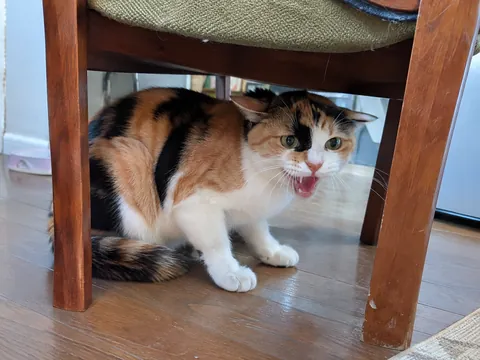
Look for the opposite of the list above. The RSPCA describes a worried cat as having a tense, crouched body, wide pupils, a tail pressed tight to the body, flat ears and a lowered head, and notes that worried or anxious cats may hide. An angry cat may have an arched body, fur on end, forward whiskers and a tense tail, and it may hiss.
Other signs worth noticing are growling or hissing when family members approach, withdrawing from the household, or changes in grooming, eating or litter box use.
A quick happiness check you can do at home
Over a few days, watch your cat and answer these questions. They draw on the signs above, so one “no” is not alarming, but several together are worth attention.
- Does my cat come to me, or sit near me, in a relaxed way?
- Are the ears forward, the eyes soft and the tail up when it walks around?
- Does it eat, drink, groom and use the litter box as usual?
- Does it play, even for a minute or two, or show interest in a window or toy?
- Does it settle into sleep in a loose, stretched-out position rather than a tight, alert crouch?
- Can I touch it without it tensing, flicking its tail or turning its head toward my hand?
Cats are individuals. A shy cat may never greet you at the door yet still be perfectly content, so compare your cat with its own normal rather than with an ideal. A change from that normal is more telling than any single sign.
What you can do
- Let your cat set the pace. Offer a hand to sniff and pet only when the cat leans in. Stop when it signals it is finished.
- Offer places to hide and perch. Worried cats feel safer with somewhere to retreat, which the RSPCA recommends.
- Play every day with a wand toy, or try the free laser game for cats in your browser. Short, regular sessions can burn off energy.
- Keep routines steady, including feeding times and a clean litter box.
If you want a lighthearted extra, the Mood photo feature in Cat Translator gives a playful guess about your cat’s mood from posture. It is for fun, not a diagnosis, but it can encourage you to look closely at the details above.
When to call your vet
A sudden change in behavior can mean your cat feels unwell rather than unhappy. The VCA says that withdrawal from family interactions, hiding, decreased eating or drinking, changes in grooming and litter box accidents can all be signs of pain, and that any of these changes should be brought to your veterinarian’s attention. Call your vet if you see a new pattern that lasts, or right away if your cat stops eating.
Sources
- Cats Protection — How to tell if your cat is happy
- RSPCA — Cat body language
- International Cat Care — Cat communication
- VCA Animal Hospitals — Meaning of different cat sounds
- VCA Animal Hospitals — How do I know if my cat is in pain?
Cat Translator is an entertainment app. This article is general information, not veterinary advice. If your cat's behavior changes suddenly, talk to your vet.