Why is my cat so clingy?
A clingy cat may be bored, stressed, bonded to you, or sometimes unwell. Learn the common reasons, what helps, and when a sudden change needs a vet.

A cat can be clingy because she is very bonded to you, bored, stressed or reacting to a change at home. Sometimes it is a sign she feels unwell, especially if it is new, sudden or comes with other differences.
This guide covers seven common reasons, what you can do to help, and the signs that mean it is time to talk to your vet.
The reasons, one by one
1. She is simply very bonded
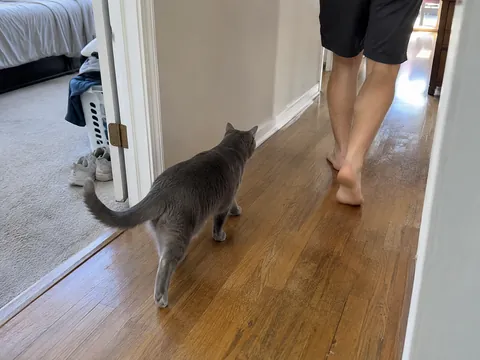
Some cats are naturally social. They follow you from room to room, sit on your lap and sleep next to you. If this has always been her personality, it is not a problem, just a cat who loves company. You can read more about that habit in why cats follow you everywhere.
2. Her needs are not fully met
The Feline Veterinary Medical Association says attention-seeking behavior can include vocalizing, pawing at caregivers or knocking items off shelves, and that it most commonly occurs because the individual cat’s needs have not been met. The same guidance says cats need interactive play at least twice daily.
A bored cat often turns to the nearest entertainment, which is you. If this sounds familiar, our guide to what to do when your cat is bored has ideas.
3. She is stressed
International Cat Care lists becoming more dependent on owners among the signs of chronic stress in cats, alongside hiding and playing less. Stress can come from other cats, from being bored or confined, and from inconsistent routines or unwanted contact from people.
4. Anxiety
VCA Animal Hospitals lists clinginess among the signs of anxiety in cats, along with hiding more than usual, appetite changes, less interest in play, difficulty sleeping, overgrooming and going outside the litter box. VCA also notes these signs are non-specific, which means they can have physical causes as well.
5. Something changed at home
Cats are territorial and bond strongly with their home. International Cat Care says house moves are potentially very stressful for cats. A new baby, a new pet, a different work schedule, rearranged furniture or someone moving out can all push a cat toward you for reassurance.
Keeping routines steady helps. International Cat Care advises maintaining routines to provide continuity and familiarity, and letting your cat start interactions so she feels she has choice and control.
6. Aging
The ASPCA says cats often suffer a decline in functioning as they age, including cognitive functioning. Its checklist of behavior problems in older cats includes needs constant contact, becomes overdependent and clingy. The ASPCA stresses that many changes in behavior are signs of treatable medical disorders, and that you should report all changes to your cat’s veterinarian.
7. She feels unwell
Cats are good at hiding pain and illness. A cat who feels unwell may seek more reassurance, or may become quieter and withdraw instead. VCA’s advice is to rule out physical health conditions before assuming your cat is anxious. That is why a sudden change deserves a check.
What to do about a clingy cat
You do not need to push her away. Instead, give her what she needs in a structured way.
- Schedule play. Two sessions a day with a wand toy or a free laser game let her hunt, catch and finish with a treat. The Cat Translator app has six cat games with rounds of one or two minutes, if you want a quick option on your phone.
- Make the home richer. A window perch, scratching posts, hiding spots and puzzle feeders give her things to do while you are busy.
- Keep routines predictable. Feed, play and go to bed at similar times each day.
- Reward calm. Give attention when she is relaxed rather than when she cries or paws at you.
- Let her choose. International Cat Care suggests allowing your cat to initiate contact so she feels in control.
- Give her a safe place to go when you are out, with a bed, water and familiar scents.
If your cat also meows a lot at night, see why cats meow at night.
A simple plan for a clingy cat
If you want to change how clingy your cat is, aim for a plan you can keep up. A few small habits work better than one big effort.
First, rule out health. If the clinginess is new, book a vet visit before you try anything else. Second, add predictable attention. Choose two or three times a day, such as when you wake up, after work and before bed, and give your cat full attention for a few minutes: play, pets, talk. Cats cope better when they know when the attention is coming.
Third, add independent fun for the times you are busy. Rotate toys, put a bird feeder outside a window, and hide a few treats around the room. Fourth, make leaving boring. Do not make a big fuss when you go or come back, and leave something that smells like you in her bed.
Give it a few weeks. If your cat is still distressed, or you are worried about separation-related distress, ask your vet about a qualified behaviorist. For ideas on talking and playing with your cat, see how to talk to your cat.
Keep a short diary for a week. Note when your cat gets clingy, what happened just before, and how she responds to play or food. Patterns often appear quickly: perhaps she is clingiest after you come home, or when the house is quiet, or just before mealtime. A simple record also gives your vet something concrete to work with if you do need an appointment, and it helps you see whether the new routine is making a difference.
When to call your vet
Clinginess is not a problem on its own. Book a vet visit if it is a change from her usual behavior, and especially if you notice:
- A sudden increase in need for contact that lasts more than a few days
- Hiding, eating or drinking less, or changes in litter habits
- Weight loss, vomiting, or breathing that looks faster or harder
- Vocalizing more, wandering, or seeming confused, especially in an older cat
- Distress when left alone, such as crying, soiling or destroying things
A vet can check for medical causes first. If none is found, they can suggest behavior changes or refer you to a qualified behaviorist.
The bottom line
A clingy cat is telling you something, even if the message is just that she loves you. Understand the reason, give her plenty to do, and keep an eye out for sudden changes. For more on reading your cat, see our cat body language guide.
Sources
- International Cat Care — Stress in cats
- VCA Animal Hospitals — Understanding Anxiety In Cats
- ASPCA — Older Cats with Behavior Problems
- Feline Veterinary Medical Association (catvets.com) — Training Techniques for Addressing Undesirable Behaviors
- International Cat Care — Moving house with your cat
Cat Translator is an entertainment app. This article is general information, not veterinary advice. If your cat's behavior changes suddenly, talk to your vet.