Why did my cat stop meowing?
Why did my cat stop meowing? Often it is a change in routine or personality, but a quieter or changed voice can also signal illness. Here is how to tell.
Most of the time, a cat who stops meowing is just using other ways to get your attention, or has learned that she does not need to ask as often. But a cat who goes quiet along with other changes, or whose voice sounds different, may be unwell, so the question is whether anything else has changed.
This article covers normal reasons for a quieter cat, health causes of a lost or changed voice, how to check what is going on, and when to call your vet.
Meowing is optional for cats
Cats do not need to meow. VCA says adult cats do not meow at each other and use purring, yowling, growling and hissing with other cats instead, while meowing is a behavior kittens use to call their mother. International Cat Care agrees that adult cats rarely meow to each other and that meows are mostly aimed at people.
So your cat’s meowing is something she does for you, and how much she does it depends on what works. People often reinforce the meow, International Cat Care notes, which shapes it into many different forms. If you have changed how you respond, she may have changed how she asks.
Normal reasons a cat gets quieter
She does not need to ask anymore
A cat who meowed to be fed on a schedule, then got an automatic feeder, may stop calling at the bowl. A cat who used to cry for company may be quieter once you work from home. When the need is met in advance, the meowing fades.
She found another way to get your attention
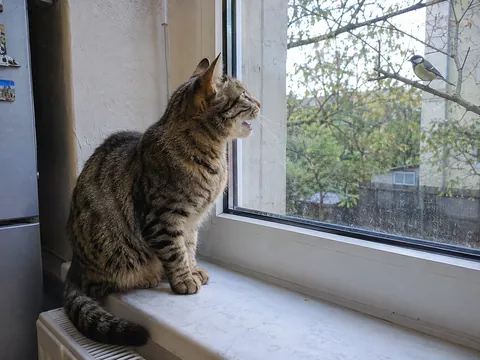
Cats are clever. If meowing did not get an answer, she may have switched to sitting on your keyboard, tapping your arm, staring or standing at the bowl. Quiet does not always mean she wants less.
The silent meow
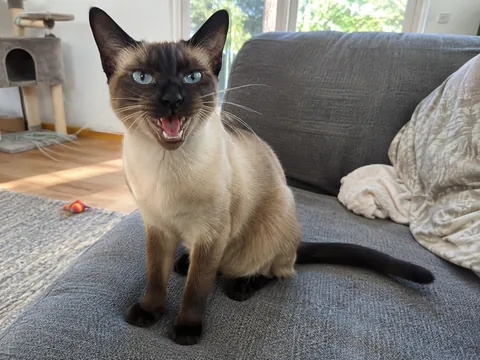
Many cats open their mouths and make no sound that you can hear, or a sound so soft it barely carries. This is common, often during greetings, and usually not a problem, especially if it has always been part of how she talks.
She is just a quieter cat
Some cats talk a lot and some barely do. Personality, early life and your household all matter. A shy or calm cat may stay quiet for life.
Her routine or household changed
A new pet, a move, a new baby or a different schedule can make a cat withdraw. She may be quieter because she is stressed or unsure. If she also hides more or eats less, treat that as a sign to look closer.
She is in heat or no longer in heat
Cats in heat are particularly vocal, according to VCA. If your cat was meowing a lot because of her heat cycle and was then spayed, the quieter cat you see afterwards is the expected result. ASPCA says spaying is the best way to reduce meowing caused by the heat cycle.
Health reasons a cat stops meowing or sounds different
A quiet cat is not automatically a sick cat. But the voice can change with illness, so it is worth knowing the signs.
Upper respiratory infections
Cornell lists the symptoms of upper respiratory tract infections as clear or colored discharge from the eyes or nose, coughing and sneezing, and notes that cats may also have mouth ulcers, lethargy and reduced appetite. VCA adds that calicivirus can cause painful ulcers on the tongue, palate, gums, lips or nose, which can lead to excessive drooling, and that cats with a respiratory infection have a decreased sense of smell and often a decreased appetite.
A cat who feels unwell, has a sore mouth or is congested may simply be less inclined to make noise.
Changes in the tone of her voice
Cornell notes that cats with some fungal respiratory infections, such as Cryptococcus infection, may show changes in the tone of their vocalizations, along with noisy breathing and snoring. A voice that sounds hoarse, thin or different, especially with breathing changes, is a reason to call your vet.
General illness, pain or tiredness
Cats are good at hiding illness. A cat who stops greeting you, stops asking for food or plays less may be feeling poorly, even if she was never a big talker. Look at the whole picture rather than the sound alone.
How to tell what is going on
Ask yourself these questions:
- Is she eating, drinking and using the litter box normally? If yes, the quiet is more likely behavioral.
- Is she playing, greeting you and moving normally? A cat who still engages with you is usually fine.
- Is there anything physical? Sneezing, discharge, drooling, bad breath, coughing or noisy breathing point toward a vet visit.
- What changed at home? A new schedule, new pet or feeder could explain it.
- Is it sudden? A slow fade over months is different from a cat who was chatty on Monday and silent on Friday.
What to do
Watch for a few days
If she seems well otherwise, keep notes. Record when she last meowed and how she asks for things now. Weigh her if you can, or note how much she eats.
Make it easy to talk to you
Spend a few minutes a day talking to her, playing and letting her greet you. Many cats start to chatter again when they get regular interaction. If she enjoys it, a free browser laser game is a simple way to share playtime. If you want to know what her sounds are for, our guide to what cat meows mean and the article on why cats meow at you are good starting points.
Reduce stress
Keep routines steady, give her a quiet bed and hiding place, and introduce changes slowly.
Book an exam if anything else is off
Your vet can check her mouth, throat, chest and weight and tell you whether a voice change is something to treat.
When to call your vet
Contact your vet promptly if your cat stops meowing and also shows any of these:
- Sneezing, nasal or eye discharge, or coughing
- Drooling, pawing at the mouth or trouble eating
- A hoarse, thin or lost voice that she cannot recover
- Noisy, fast or open-mouth breathing, which needs urgent attention
- Eating or drinking much less than normal
- Hiding, low energy or no interest in play
- Changes in litter box habits
A cat who is quiet but otherwise bright, hungry and playful rarely needs more than observation. When in doubt, call: it is quick to ask.
The takeaway
A quieter cat is often a settled cat who has found other ways to talk. If anything else about her has changed, take it seriously and let your vet take a look. Keeping track of her normal behavior is the best tool you have, and it helps whether she is chatty or not. To compare with a cat who talks all the time, see why your cat is meowing so much.
Sources
- International Cat Care — Cat Communication
- VCA Animal Hospitals — Why Do Cats Meow?
- Cornell Feline Health Center — Respiratory Infections
- VCA Animal Hospitals — Feline Calicivirus
- ASPCA — Meowing and Yowling
- VCA Animal Hospitals — Cat Behavior Problems: Vocalization
Cat Translator is an entertainment app. This article is general information, not veterinary advice. If your cat's behavior changes suddenly, talk to your vet.