Why does my cat meow at me?
Why does my cat meow at me? Adult cats mostly meow at people, not other cats, to greet, ask for food or attention, or flag a problem. Here is how to read it.
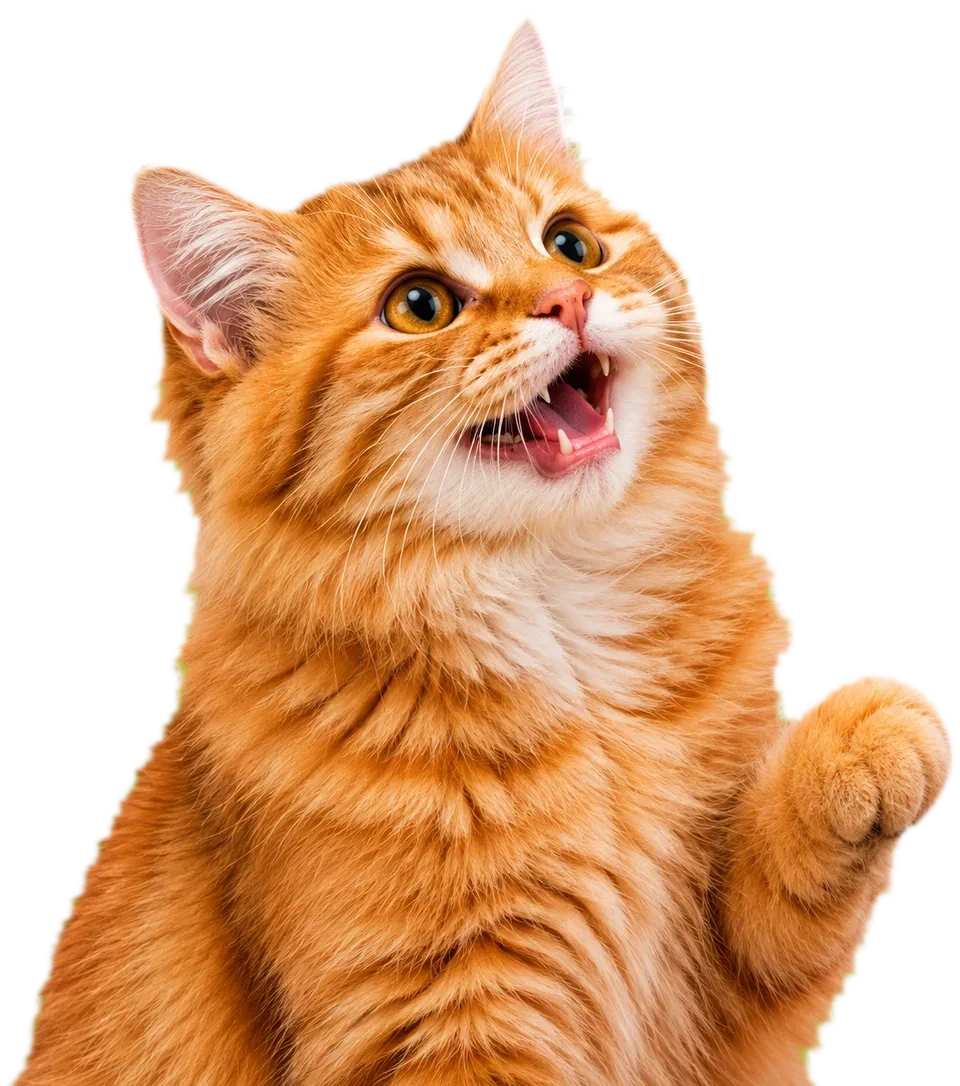
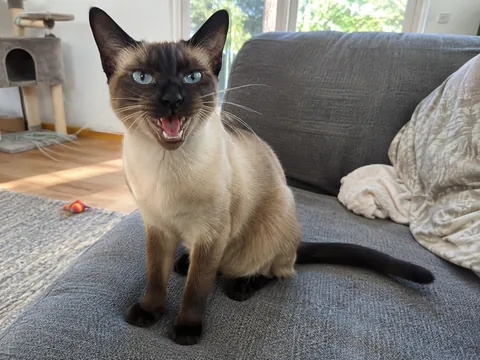
Your cat meows at you because meowing is how adult cats talk to people. It is a sound they mostly use with humans and hardly ever with each other, and it usually means one of a few things: hello, I want something, or something is wrong. Which one it is depends on when and where she says it.
Below: why cats meow at people, the usual messages, how to read the context, and what to do when the talking becomes too much.
Cats mostly meow at humans
Kittens meow to call their mother. Most adult cats leave that behind with each other. International Cat Care says that in most circumstances meows are directed at people rather than other cats, and that they are rarely heard during adult cat-to-cat interactions. VCA says the same: adult cats use purring, yowling, growling and hissing with one another, while domestic cats developed the meow specifically for interactions with humans.
So when your cat meows at you, she is using the tool that tends to work on people. And it does. ASPCA says cats keep meowing probably because meowing gets people to do what they want. International Cat Care adds that people often reinforce the meow, helping to shape it into many different forms. This is why your cat’s voice may sound nothing like another cat’s.
What your cat may be saying
“Hello”
ASPCA says cats meow to greet people. Greeting meows tend to be short and friendly, often with a raised tail, rubbing against your legs or following you around. They are common when you come home, wake up or walk into a room.
“I am hungry”
A meow near the food bowl, the kitchen or the cupboard where the treats live is almost always a request. If she walks toward the bowl and looks back at you, she is making it very clear.
“Pay attention to me”
Cats meow when they want to be petted, played with or simply noticed. This can look like a meow while you are on the phone or working at your computer.
“Open the door”
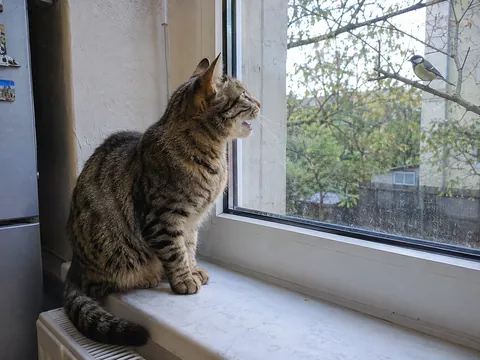
Cats are keen on getting in and out of rooms, cupboards and the shower. A meow at a door or by a window is a request for access.
“Something is wrong”
ASPCA says cats meow to ask for things and to signal that something is wrong. A dirty litter box, an empty water bowl or an unhappy situation can all prompt a meow. A different or louder meow than usual deserves attention. ASPCA suggests making sure her needs are met before assuming she is just being demanding.
How to read the meow
No one can know for sure what a specific meow means, and this includes experienced owners. A study on how people interpret cat sounds found that fewer than half of participants correctly associated meows with the situation they were recorded in, although cat owners did better than non-owners. That is a good reminder that meows are best read as part of a bigger picture.
Use these clues:
- Where is she? At the bowl, the door, your lap or alone in another room.
- What time is it? Right before dinner, when you wake up, when you come home.
- What is her body doing? A tail held high and relaxed body suggests friendly. Flattened ears, a swishing tail or a crouched body suggest she is unhappy or nervous.
- What happens after? The meow that stops the moment you feed her was probably about food.
- Is it different from her usual? Cats develop patterns. A change in tone, volume or frequency matters more than the sound itself.
You will learn your cat’s habits faster than any guide can teach you. Notice which meow she uses for dinner, which for greeting, and which for the door.
If you want to try a more playful approach, the Cat Translator app lets you record your cat’s meow (hold to record, up to 10 seconds) and shows a playful line in a chat with her. It is for fun, and it will not tell you what she really means.
Why some cats talk more than others
Some cats say a few words a day and others narrate everything. Part of it is personality. Part of it is history: a cat who grew up with people who answered every meow learns that talking pays off. A cat who lives alone with one person often develops a bigger vocabulary than a cat in a busy house with other pets, because you are her main audience.
Age and sex matter too. Kittens are noisy, young adults settle, and some older cats get louder again. A cat who has been talkative her whole life is not a problem. The pattern to watch for is change, not volume.
What to do when the meowing is too much
Meet her needs first
Food at predictable times, fresh water, a clean litter box, and the ability to go where she wants.
Reward quiet, not noise
ASPCA suggests giving her attention immediately when she is quiet. If you feed or pet her mid-meow, she learns that meowing works. Do not scold or hit her, since ASPCA warns that punishment is unlikely to help and can make her afraid of you.
Give her something to do
Short play sessions, a window perch and puzzle feeders reduce meowing that comes from boredom. Our free browser laser game is another small option for a few minutes of chase.
Talk back
Cats like routine conversation. Replying in a soft voice when she greets you is harmless and often makes her happier.
When to call your vet
A cat who has always been talkative is usually just expressive. Call your vet if meowing is new or has suddenly increased, or comes with:
- Weight loss, increased thirst or a change in appetite
- Meowing while using the litter box, or straining
- Restlessness or confusion, especially in an older cat
- Hiding, limping or flinching when touched
- A voice that sounds hoarse or different
ASPCA notes that older cats are prone to an overactive thyroid and kidney disease, and that either can lead to excessive meowing. Our article on why cats meow so much has more on that side of things, and why your cat meows at night covers the nighttime version.
The short version
Cats meow at us because it works. Look at the situation, her body language and her routine, and you will be right more often than not. If she is quiet, try why your cat stopped meowing for the opposite problem.
Sources
- International Cat Care — Cat Communication
- VCA Animal Hospitals — Why Do Cats Meow?
- ASPCA — Meowing and Yowling
- What's in a Meow? A Study on Human Classification and Interpretation of Domestic Cat Vocalizations (Animals, PMC)
Cat Translator is an entertainment app. This article is general information, not veterinary advice. If your cat's behavior changes suddenly, talk to your vet.