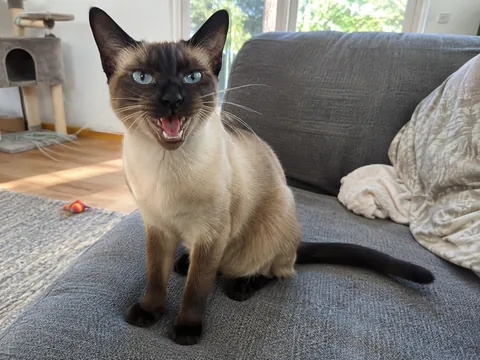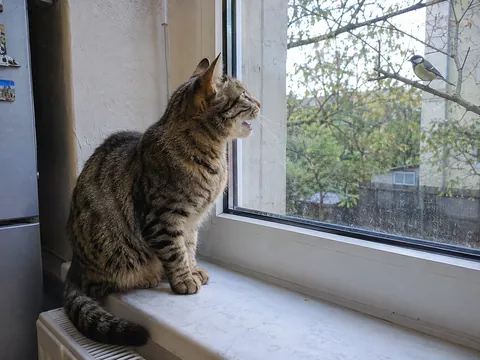
Why is my cat meowing so much?
Why is my cat meowing so much? Hunger, attention, boredom, heat cycles, age and health problems are the usual causes. Here is how to tell which one it is.
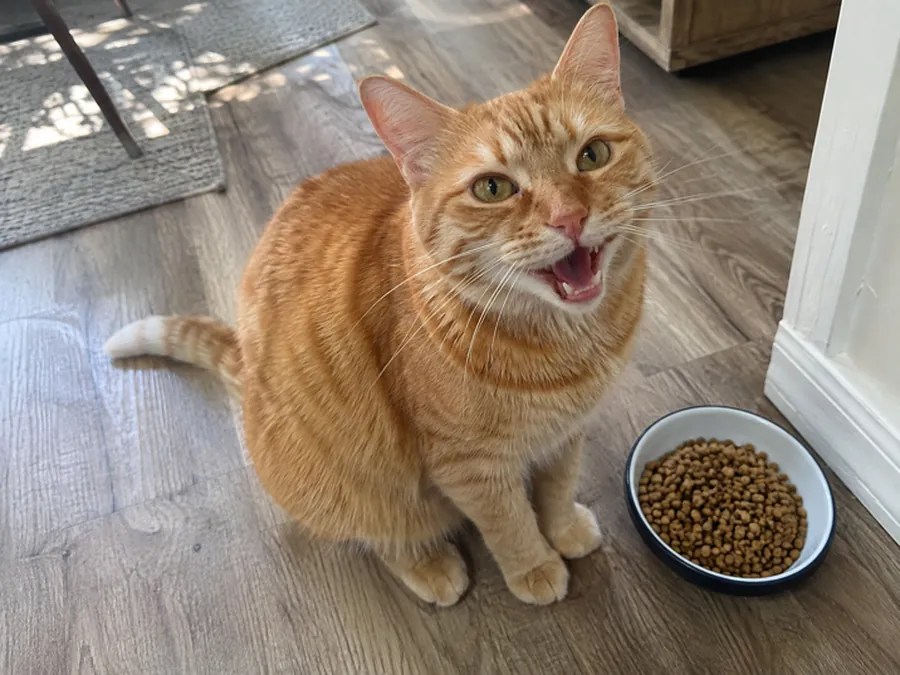
Most cats who meow a lot are asking for something: food, attention, play or a closed door opened. A few are in heat, a few are bored, and some are older cats with a health problem that makes them louder. If the meowing is new or has suddenly increased, a vet visit is the first step. If it is just how your cat talks, the fixes below can quiet things down.
This article walks through the common reasons for constant meowing, how to tell them apart, and what to do about each.
Why cats meow at people in the first place
Kittens meow to call their mother. Adult cats mostly drop the habit with each other and keep it for us. International Cat Care notes that in most situations meows are aimed at people rather than other cats, and that they are rarely heard when adult cats interact with each other.
So when your cat meows, she is talking to you. VCA describes it as a way cats have developed to communicate with humans. Cats also learn what works. International Cat Care points out that people often reinforce the meow, which helps shape it into many different forms. That is why two cats in the same house can sound completely different.
8 common reasons your cat meows so much
1. She wants food
This is the classic. A cat who meows near the bowl, at mealtimes or when you walk into the kitchen is asking for a meal. If you have ever fed her to get some peace, she learned that meowing works. ASPCA makes the same point: cats keep meowing because it gets people to do what they want.
2. She wants attention or company
Cats who are alone for long stretches often meow when you come home or sit down. This is a greeting and a request. Some cats follow you from room to room and narrate the whole trip.
3. She is bored
An indoor cat with few things to chase, climb or watch can turn to meowing for entertainment. Boredom meowing tends to start in the evening or whenever the house is quiet and she has energy to burn.
4. Something in her environment is wrong
ASPCA advises making sure her needs are met before assuming she is just being demanding. Check the litter box, water, and whether she has been shut in a room or out of one. A cat locked out of her favorite spot will say so.
5. She is in heat, or he smells a female in heat
VCA says cats in estrus are particularly vocal when “calling”. An intact male can also meow and yowl when he detects a female in heat. ASPCA says spaying is the best way to reduce meowing caused by the heat cycle, and neutering is the best way to reduce it in an intact male.
6. She is stressed
New people, a new pet, a move, or even rearranged furniture can make a cat vocal. If the meowing started when something changed at home, that is worth noting.
7. Her senses or mind are changing with age
VCA says some older cats begin vocalizing as their senses or cognitive function decline. Loud calling in the middle of the night is a common version of this, which we cover in why cats meow at night.
8. She has a medical problem
ASPCA notes that as cats age they are prone to an overactive thyroid and kidney disease, and that either can lead to excessive meowing. VCA says a veterinary exam is recommended to rule out medical causes of vocalization, and lists pain, endocrine problems and high blood pressure as examples.
How to tell which one it is
Look at the pattern before you try fixes. A short log on your phone for three or four days is enough.
- When does it happen? Right before meals points to hunger. Late evening points to boredom or play. Night points to a different set of causes.
- Where is she? Meowing at a door, the fridge or the food bowl is a request. Meowing while walking around the house alone can be stress or confusion.
- What does she do next? If she goes to the bowl or your lap, you have your answer. If she paces, hides or seems restless, think stress or health.
- Is it new? A sudden change in how much or how loudly she meows matters more than the amount itself.
Cats also vary. Some are talkers by nature. A cat who has always chatted and is otherwise eating, drinking and playing normally is usually just expressive.
What to do about it
Cover the basics first
Fresh water, a clean litter box, food at predictable times and no closed doors she cannot open. Many cases of “she will not stop meowing” end here.
Do not reward the demand, and do not punish it
ASPCA recommends giving her attention right away once she is quiet. Feeding or petting in the middle of a meowing spell teaches her to meow longer. Do not scold or hit her. ASPCA warns that punishment is unlikely to reduce meowing and may make her fearful of you.
Expect a rough patch. VCA describes an extinction burst: when the reward stops, the behavior may get more intense before it fades. Staying consistent for a couple of weeks usually gets through it.
Give her something to do
Two or three short play sessions a day with a wand toy burn off energy and meet the need that meowing was trying to fill. Food puzzles, a window perch and a cardboard box or two help. If you want a low-effort option for days when you are busy, a free browser laser game can give her something to chase.
Spay or neuter
If the meowing is tied to heat or to an intact male’s behavior, this is the single most effective change, according to ASPCA.
When to call your vet
Call your vet soon if the meowing is new, has clearly increased, or comes with other changes. Watch for:
- Weight loss with a big appetite, or a drop in appetite
- More drinking or urinating, or litter box trouble
- Restlessness, pacing, or confusion
- A change in the sound of her voice
- Meowing during or after using the litter box, which can signal pain
- Any signs of pain, such as hiding or flinching when touched
Cats age quickly, and vocal changes are often one of the first things owners notice. A check-up can rule out medical causes before you spend weeks on behavior fixes.
Listen to the context, not just the sound
Nobody can know exactly what a given meow means. You can learn your own cat’s patterns, though. Over time you will recognize her mealtime meow, her greeting and her complaint about the closed door. If you are curious about how different sounds are used, our guide to what cat meows mean is a good next step, and why your cat meows at you goes deeper on the human side of the conversation.
For fun, the Cat Translator app can record your cat’s meow and show a playful line in a chat. It is entertainment, not a real translation, but some owners enjoy it as a way to notice when and how often their cat talks.
Sources
- ASPCA — Meowing and Yowling
- VCA Animal Hospitals — Cat Behavior Problems: Vocalization
- VCA Animal Hospitals — Why Do Cats Meow?
- International Cat Care — Cat Communication
Cat Translator is an entertainment app. This article is general information, not veterinary advice. If your cat's behavior changes suddenly, talk to your vet.