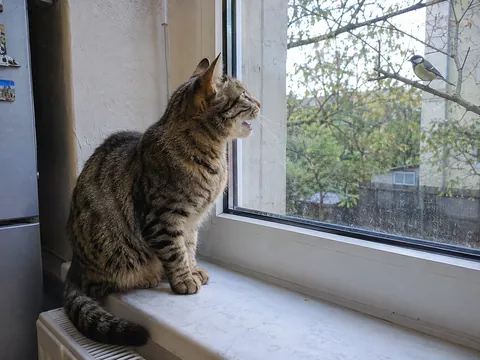
Cat meow meanings: what your cat is saying
Cat meow meanings explained: why cats meow, what greeting, food, chirp, yowl, purr, hiss and growl usually signal, and when a change in voice needs a vet.
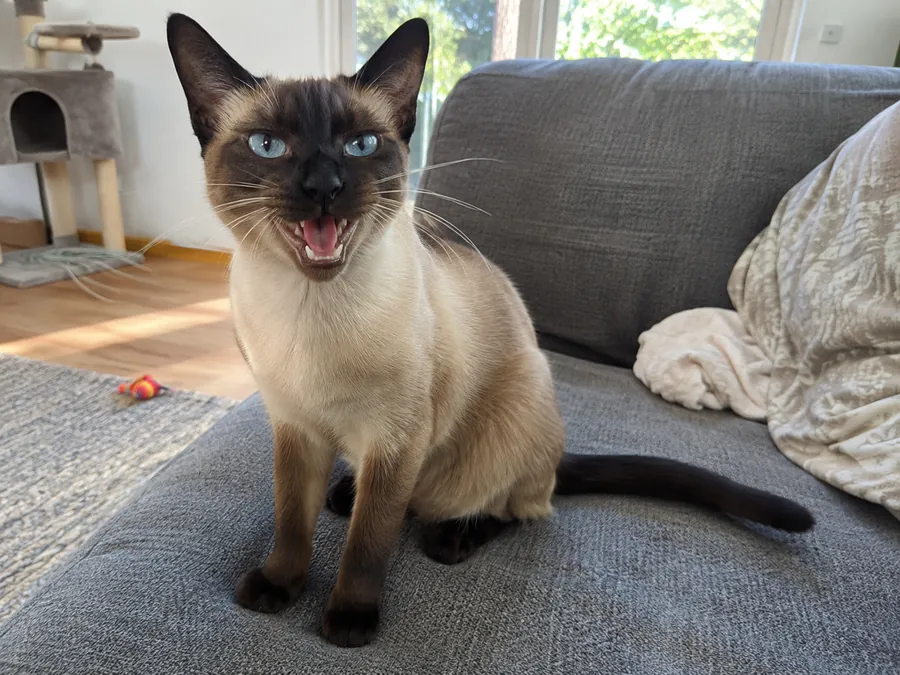
Cats mostly meow at people, not at each other, and the usual meanings are simple: hello, I want something, or I am not happy. Loud meowing around dinner time usually means “feed me”, a chirp or trill is a friendly greeting, and a long, drawn-out yowl can mean distress.
Because every cat develops its own set of sounds, treat the meanings below as a starting point. This guide covers the common sounds, what they usually mean and when a change in your cat’s voice calls for a vet.
Why cats meow at people
The VCA explains that domestic cats have developed the meow specifically for interacting with humans, and that adult cats do not meow at other cats. Kittens use it with their mothers, and adult cats keep the ability and direct it at people. International Cat Care points out that the common occurrence of meows directed at people suggests that people often reinforce the meow, meaning the cat learns it works.
The ASPCA lists the usual triggers: greetings, requests for attention, food and access to rooms or the outdoors.
The common meow meanings
| Sound | Usual meaning |
|---|---|
| Short, bright meow | Greeting, or “I’m here” |
| Meow at dinner time | “Feed me” |
| Chirp or trill | Friendly greeting |
| Gentle purr | Calm, content |
| Hiss | Back off |
| Growl | Wants space |
| Long, drawn-out yowl | Distress, discomfort, or looking for a mate |
Greeting and attention meows
Cats Protection says many house cats use a short chirp or trill to greet people. VCA calls it a friendly sound, often used when greeting you or heading to the food bowl. Our guide to why your cat chirps at you goes deeper on this one. If your cat meows whenever you walk into a room, see why your cat meows at you.
Food and request meows
The VCA gives a simple example: loud meowing around dinner time means “feed me.” Cats Protection says owners often learn that one cat’s short meow means attention and a longer one means food. Many cats also meow at doors and cupboards.
Yowls and howls
The ASPCA describes a yowl as a sound similar to the meow but more drawn out and melodic. Adult cats mostly yowl during breeding season, when females advertise their receptivity to males and males yowl to gain access to females. The VCA adds that yowling can indicate that a cat is distressed, uncomfortable or not feeling well, and a cat with urinary problems may yowl in the litter box because of pain. For more, read why your cat is yowling.
Purrs, hisses and growls
These are not meows, but they complete the picture. A purr usually signals calm, though the VCA says it can sometimes signify stress or pain. Hissing is a sign to back off, and a growling cat does not want to be messed with. Our guide to why your cat hisses at you explains what to do.
Pitch, length and body language
The same meow can mean different things depending on how it sounds and what the cat is doing. The VCA says cats vary pitch, tone and loudness, and that a happy cat’s meow usually sounds sweeter than one expressing displeasure. Cats Protection says a more urgent, higher-pitched purr can signal a request for attention.
Always look at the body. A meow with ears forward and a raised tail is a greeting. A meow with flat ears and a crouched body is not. See cat body language for the full guide.
How well can people read meows?
Not as well as we would like. A 2020 study (Prato-Previde and colleagues) asked 225 adults to match cat vocalizations to the situations in which they were made. Less than half of the participants were able to associate the vocalizations with the correct context. The best recognized meow was the one made while waiting for food, and cat owners did better than non-owners. The authors concluded that people are not very good at extracting precise information from meows, and that recognition depended mainly on experience with cats.
In practice this means you are likely to be better at reading your own cat than a stranger would be. Pay attention to when your cat vocalizes, where it is standing and what happens right after.
Learning your own cat’s vocabulary
Because each cat builds its own range of sounds, the quickest way to decode yours is to log a few examples. For a week, note the sound (short, long, rising, low), the place, the time of day and what your cat did next. You will probably find three or four repeating patterns: a greeting at the door, a request near the food bowl, a complaint at a closed door, a call from another room.
Once you know them, you can respond in a consistent way, and your cat will meow less often and more clearly because the sounds work. Be aware that answering every meow with food or attention teaches the cat to ask more often, so decide which requests you want to reward.
How to respond to a meowing cat
- Greeting meow: say hello and give a calm acknowledgment.
- Dinner meow: feed on a regular schedule so the cat learns when to expect meals.
- Door meow: check whether the cat wants in or out, or simply wants company.
- Constant meowing: see why your cat is meowing so much and rule out health causes first.
- Night meowing: read why your cat meows at night.
If you want a fun way to hear your cat’s voice, Cat Translator lets you record a meow or purr for up to 10 seconds and shows a playful line in a chat with your cat. It is for entertainment, and the lines are just for fun.
When to call your vet
Excessive or changed vocalization can signal a medical problem. The ASPCA says numerous diseases can cause cats to feel unusually hungry, thirsty, restless or irritable, and that older cats are prone to an overactive thyroid and kidney disease. It recommends that a cat who meows a lot be checked thoroughly by a veterinarian, even if the cat has a history of meowing for food.
Call your vet if your cat’s voice changes suddenly, if meowing is constant or new in an older cat, if your cat yowls in the litter box, or if loud vocalizing comes with hiding, eating or drinking changes or other behavior changes. Cats Protection also notes that a purr can come with pain, so watch for hiding or loss of appetite.
Sources
- International Cat Care — Cat communication
- Cats Protection — How to speak cat: why do cats meow?
- VCA Animal Hospitals — Meaning of different cat sounds
- VCA Animal Hospitals — Why do cats meow?
- ASPCA — Meowing and Yowling
- Prato-Previde et al. — What's in a Meow? Human classification of cat vocalizations (Animals, 2020)
Cat Translator is an entertainment app. This article is general information, not veterinary advice. If your cat's behavior changes suddenly, talk to your vet.