Bird games for cats: why they work and how to set them up safely
Why do cats chatter and freeze at birds on screen? Learn how flying prey triggers hunting instincts and how to set up bird games and cat TV safely.

Bird games work because birds are a natural cat prey, and their quick, fluttering, flying movement is hard for a cat to ignore. A bird on a screen, or a “cat TV” video of birds at a window, can hold an indoor cat’s attention for minutes at a time. It is best used as a warm-up, with a real toy to finish so your cat gets to catch something.
This guide explains why birds trigger hunting instincts, how to set up screen play and cat TV safely, and how to avoid the frustration that comes from prey that can never be caught.
Why do birds trigger a cat’s hunting instinct?
International Cat Care says cat prey is small and most commonly small mammals and birds. Birds have several features that attract cats: they are small, they move in sudden bursts, they flit between perches and they take off without warning. The AAFP/ISFM environmental needs guidelines recommend moving a wand toy to mimic flying prey, swooping through the air, as one way to meet a cat’s play needs.
Birds also invite a particular posture. Many cats crouch low, fix their eyes on the target, and make a rapid, clicking chatter. People disagree about what the chattering means, and nobody can say for sure. It does tend to appear when a cat is highly aroused by prey it cannot reach, so it is a sign your cat is engaged rather than a message about what she wants.
Cats do not hunt because they are hungry, either. International Cat Care explains that cats will hunt when the opportunity arises regardless of hunger, and the AAFP/ISFM guidelines say predatory behavior occurs even in well-fed cats. That is why a full bowl does not stop a sleepy cat from locking on to a screen bird.
Do bird games and cat TV help indoor cats?
An indoor cat has few chances to watch, stalk and pounce. The AAFP/ISFM guidelines say that failing to provide opportunities for predatory-type behaviors can result in obesity, or in boredom and frustration that can express itself as overgrooming, stress-associated disease or misdirected aggressive behavior.
Bird games and cat TV give your cat something to watch and chase with her eyes. They are an addition to active play, not a substitute. Real play includes a catch, and a screen bird cannot supply one. If you want a refresher on spotting boredom, see what to do when your cat is bored.
How to set up bird games safely
A few small precautions go a long way.
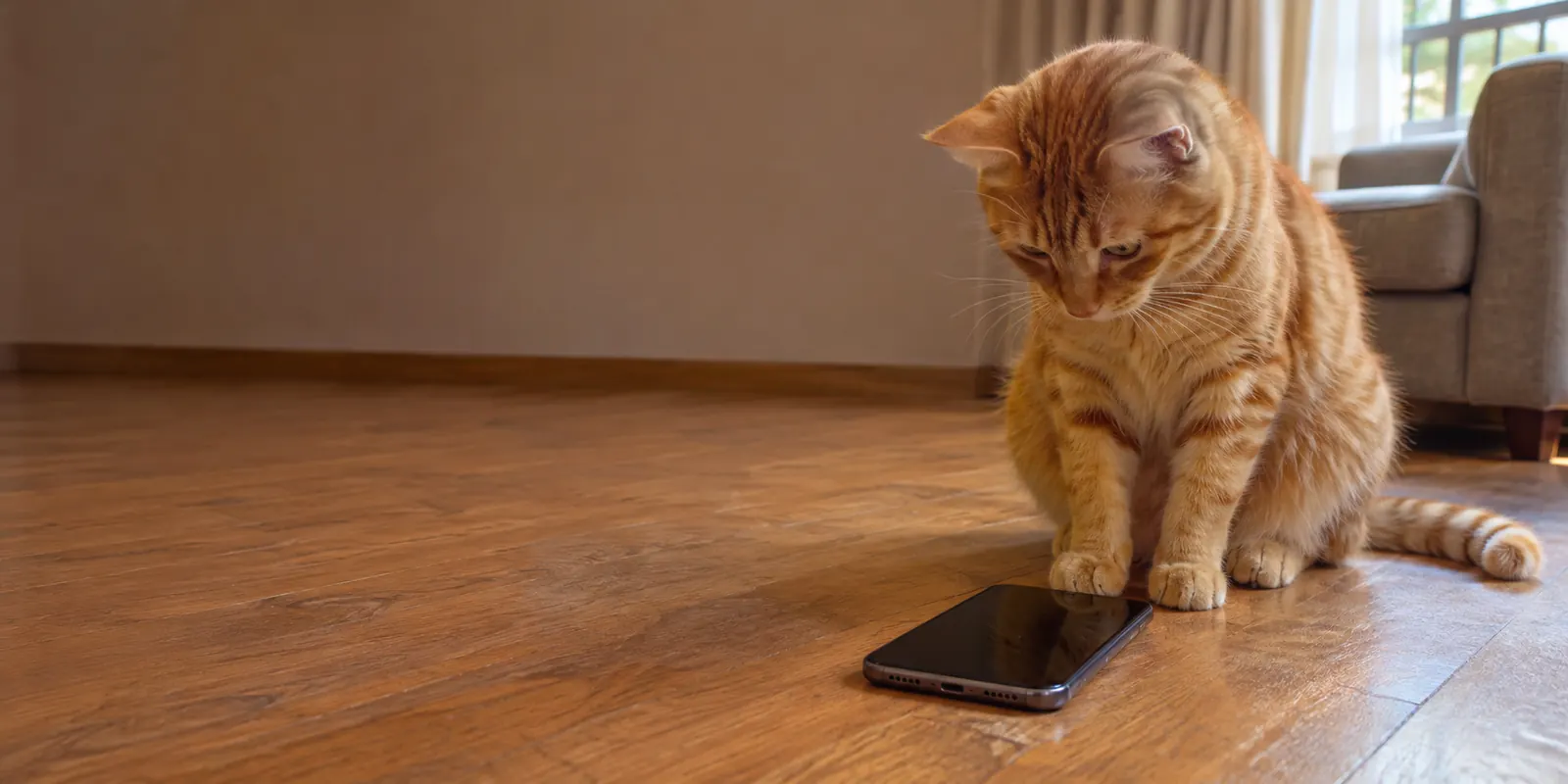
- Choose the surface. A tablet on the floor invites paws, so use a screen protector and place it flat on a steady surface. A TV or monitor on a stable stand is fine for watching only.
- Move cords and loose objects out of the way, because a determined pounce can knock things over.
- Keep the volume low. Chirping birdsong can be thrilling, but sudden loud noises can startle cats.
- Stay in the room. Watch the first few sessions so you know how your cat reacts.
- Limit the session. International Cat Care calls cats sprinters rather than marathon runners and says one minute of frenzied activity is a good result. Quiet watching can run a bit longer, but stop when your cat’s interest fades or she starts to look tense.
- Turn it off when you leave. An unattended screen is not an enrichment plan, and the AAFP/ISFM guidelines advise putting away toys with ingestible parts when you are not there.
End with a real catch
This is the most important step. International Cat Care says a game can frustrate a cat when the pounce and catch steps never happen, and describes ending a play session with a wand toy so that it ends on a positive note. The AAFP/ISFM guidelines add that you should let the cat catch the toy to simulate a capture and reward her with a treat afterward.
For bird play, a feather wand works well because it can swoop and flutter. Fly it through the air, let it land and twitch, then let your cat grab it. Slow down gradually and offer a small treat or meal. VCA says never to leave cats alone with wand toys, so put the wand away once you finish.
Signs the game is getting too much include a lashing tail, flattened ears, growling or sudden swatting at you or another pet. If you see them, stop and give her space. Our guide to cat body language shows what to watch for.
Where the Cat Translator app fits
Cat Translator has a Bird Window game and a Cat TV mode for this kind of screen watching. Rounds last 1 or 2 minutes at Calm, Normal or Wild speed, there is no account to create, and the app shows no ads. It is one of 6 games, so you can switch to fish, mouse or feather play if birds do not do it for your cat. If you would rather not install anything, the free browser laser game at games for cats is a quick way to see whether your cat likes screen play at all.
When bird games do not work
Plenty of cats will not look at a screen. Others react strongly at first, then lose interest. That is normal. Try these changes one at a time:
- A calmer speed setting for nervous cats.
- A different time of day, often evening.
- A quieter room with other pets out of the way.
- A different prey type. Some cats prefer something that scurries on the ground.
If your cat seems uninterested in play of any kind, or her habits have changed suddenly, mention it to your vet. Pain, age and illness can all take the spark out of play.
Bird game checklist
- Screen protector on, device flat or TV mounted securely.
- Volume low, cords out of reach.
- Short rounds, you in the room.
- Feather wand or small toy to finish, so she gets a catch.
- A treat or meal after.
- Wand away when the game ends.
Sources
- AAFP and ISFM Feline Environmental Needs Guidelines (JFMS, 2013)
- International Cat Care — Understanding the hunting behaviour of cats
- International Cat Care — Playing with your cat
- VCA Animal Hospitals — Cat behavior and training: play and play toys
Cat Translator is an entertainment app. This article is general information, not veterinary advice. If your cat's behavior changes suddenly, talk to your vet.