Fish games for cats: why they work and how to play safely
Fish games hold many cats' attention because darting movement sets off hunting instincts. Here is why, how to set up screen play safely, and how to end it.

Fish games work because cats are wired to react to small, quick things that dart away and then freeze. A fish shape that flicks across a screen sets off the same watch, stalk and pounce reflexes as a real moving target, even if your cat has never seen a fish outside a bowl. Played safely and finished with a real toy, a fish game is a cheap way to give an indoor cat some hunting-style fun.
This article covers why fish movement grabs cats, how to set up screen play so it stays safe and satisfying, and when a different kind of game is a better fit.
Why do fish hold a cat’s attention?
Here is the honest part: fish are not a typical cat prey. International Cat Care notes that a cat’s natural prey is small and most commonly small mammals and birds. What cats react to is not “fish” as a concept but the movement pattern. Small, fast, unpredictable motion near the edge of a visible space looks like something worth chasing.
Cats also do not wait until they are hungry to hunt. International Cat Care explains that hunting motivation is only partly related to hunger, and that a cat will take the chance to hunt whether or not it is hungry at that moment. The AAFP/ISFM environmental needs guidelines make the same point: predatory behavior occurs even in well-fed cats.
That is why your well-fed sofa cat can still go rigid and wiggle her hindquarters at a shimmering shape in a pond. The instinct is real, and an indoor home gives it very few outlets.
What the hunting sequence looks like in play
International Cat Care describes play as covering a cat’s natural predatory sequence: search, stalk, chase, pounce, catch and manipulate. A fish game covers the first four steps nicely. Your cat spots it, watches, creeps closer, swats.
The missing step is the catch. A glass screen cannot be caught, bitten or carried off. International Cat Care warns that games can frustrate cats when the pounce and catch parts of the sequence never happen. The AAFP/ISFM guidelines recommend letting the cat catch the toy at the end of play to simulate a capture.
So treat the screen as the warm-up and a physical toy as the finish. More on that below.
How to set up fish games safely
A little preparation keeps the device, and your cat’s paws, in good shape.
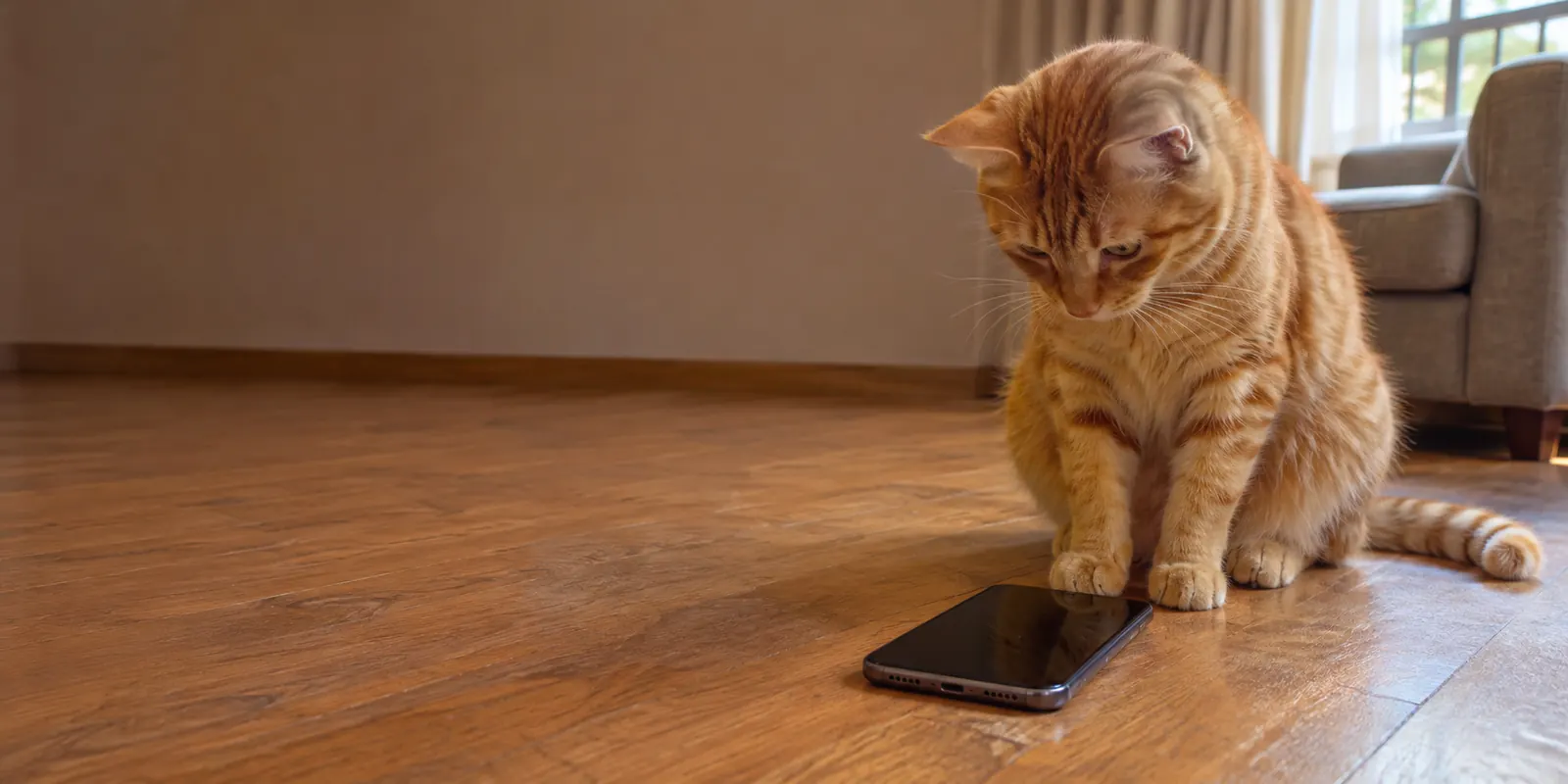
- Add a screen protector. Claws on glass leave marks, and a scratched screen is no fun to use afterward.
- Lay the device flat, or prop it firmly. A tablet on the floor or a low, steady table is better than a stand your cat can knock over. Keep it away from edges and cables.
- Turn the volume down. Some cats are startled by sudden sound, so start quiet and see how yours reacts.
- Stay in the room. Watch for rough pawing, biting at the edges or a cat who looks tense rather than excited.
- Dim the room lights a little if reflections wash out the picture.
- Put the device away when you are done. It should not become a permanent chew or scratch toy.
If your cat starts to look frustrated, with a lashing tail, flattened ears or sudden swatting at you, stop the round. Our guide to cat body language shows what these signs look like.
Keep rounds short and end with a real catch
International Cat Care describes cats as sprinters rather than marathon runners and calls one minute of frenzied activity a good result. VCA suggests that most cats benefit from several 10-minute play sessions a day, so you can stack a couple of one-minute screen rounds inside a longer play break rather than running one long game.
A simple routine:
- Run one or two short fish rounds while your cat watches and paws.
- When the interest peaks, switch to a wand toy or a small stuffed mouse and let your cat actually catch it.
- Follow with a small treat or meal, which mirrors the eating that follows a real hunt.
International Cat Care advises winding games down gradually and redirecting attention to food to prevent frustration and ambushes on people or other pets. The AAFP/ISFM guidelines also suggest rewarding the cat with a treat after play.
If you use a wand toy, put it away afterward. VCA says never to leave cats unattended with wand or fishing-pole style toys, and to watch that they do not swallow string or other non-food parts.
Where the Cat Translator app fits
Cat Translator has a Koi Pond game made for exactly this kind of play. Rounds last 1 or 2 minutes and you can pick Calm, Normal or Wild speed, so you can match your cat’s energy. There is no account to create and no ads to interrupt a round. It is one of 6 games in the app, alongside mouse, feather and bird games, so you can find the prey type your cat likes best. You can also try the free browser laser game at games for cats without installing anything.
When fish are not the right prey
Not every cat responds to the same shapes. If yours loses interest after a few seconds, change one thing at a time:
- Speed. Wild suits excitable cats. Calm suits older or more cautious cats.
- Prey type. Some cats prefer something that scurries along the ground, others something that flutters.
- Time of day. Many cats are keenest in the evening or early morning.
- Mood. A cat who is stressed, unwell or half asleep will skip play. That is normal.
If your cat has lost interest in play altogether, or the change is sudden, it is worth a vet check. Pain, aging joints and illness can all make a cat less playful. If you suspect plain boredom instead, see what to do when your cat is bored.
Fish games for cats: quick checklist
- Screen protector on, device flat and stable.
- Volume low to start.
- One or two rounds of a minute or so.
- A real toy to finish, then a treat.
- Wand toys and string put away afterward.
- Stop at the first sign of frustration.
Sources
- International Cat Care — Playing with your cat
- International Cat Care — Understanding the hunting behaviour of cats
- AAFP and ISFM Feline Environmental Needs Guidelines (JFMS, 2013)
- VCA Animal Hospitals — Cat behavior and training: play and play toys
Cat Translator is an entertainment app. This article is general information, not veterinary advice. If your cat's behavior changes suddenly, talk to your vet.