My cat is bored: signs and what to do about it
Unsure whether your cat is bored? See the common signs, why indoor cats get restless, and simple daily ways to entertain a cat that actually work.

A bored cat is usually a cat with energy and instincts and nowhere to use them. Indoor cats in particular have little chance to hunt, climb or explore, so they find their own entertainment, which often means yowling at 4 a.m., shredding a sofa arm or following you from room to room. The fix is rarely one big purchase. It is a daily rhythm of short play sessions, food that takes some effort to get, and a more interesting home.
Below are the common signs of boredom, why it happens, and a practical plan to entertain an indoor cat.
Signs your cat may be bored
No single sign proves it, but a cluster of them usually points to under-stimulation:
- Attention-seeking. Meowing, jumping on counters, pawing at you or ambushing your ankles.
- Destructive behavior. Cornell says boredom may contribute to destructive behavior and recommends dedicated play time and acceptable toys.
- Overgrooming. The AAFP/ISFM guidelines list overgrooming, stress-associated disease and misdirected aggression as possible results of boredom and frustration.
- Weight gain. The same guidelines link a lack of predatory outlets to obesity.
- Lots of sleeping with little interest in anything.
Many of these signs overlap with health problems and stress, so check the “when to call your vet” section below before assuming boredom. For loud nighttime demands, see why your cat meows at night.
Why indoor cats get bored
International Cat Care explains that cats’ motivation to hunt is only partly related to hunger, and that they hunt whenever the opportunity arises. The AAFP/ISFM guidelines add that for cats able to hunt, predation takes up a significant proportion of daily activity, with considerable physical activity and mental engagement.
A pet cat’s day has a lot of free time where that hunting used to go. Food shows up in a bowl, and the search, stalk, chase and pounce parts of the sequence never happen. That gap is the root of most boredom problems, and it is why the best fixes copy parts of the hunt.
12 ways to entertain a bored cat
Play (the core of the plan)
- Daily wand play. VCA says most cats benefit from several 10-minute play sessions every day. Cornell notes that actively playing with your cat is best. Move the toy like prey: away from her, in bursts, with pauses.
- A real catch at the end. The AAFP/ISFM guidelines advise letting the cat catch the toy. Finish with a treat or meal.
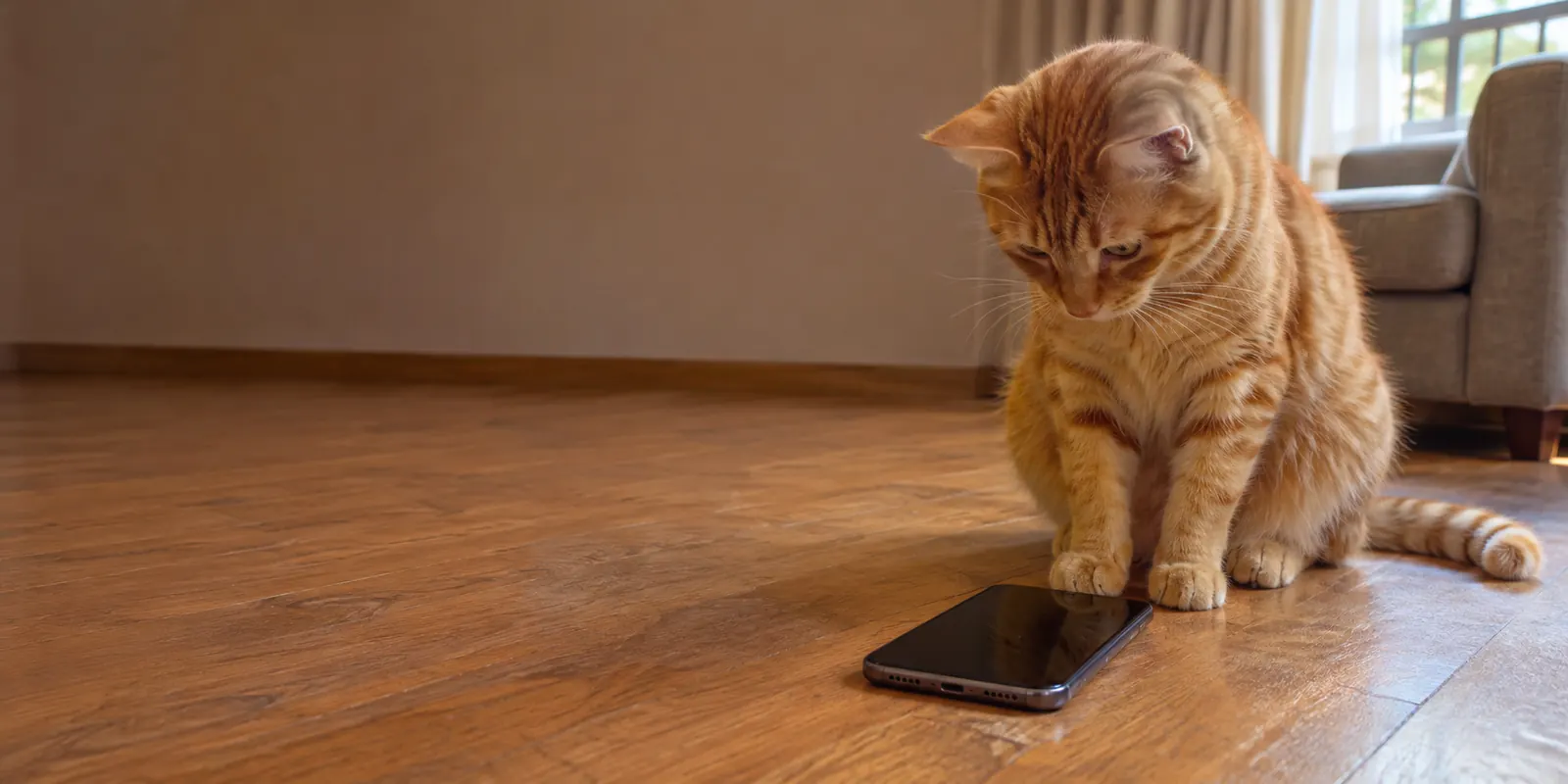
- Screen games, kept short. A game on a tablet gives movement to chase, but not a catch. Use it as a warm-up, then finish with a real toy. See fish, mouse, string and feather and bird games for setup.
- Rotate toys. VCA recommends offering only 4 or 5 options at a time and rotating them weekly. The AAFP/ISFM guidelines also suggest rotating toys to prevent boredom.
Food
- Hide food. The AAFP/ISFM guidelines suggest hiding food in multiple locations and scatter-feeding dry food.
- Use puzzle feeders, including homemade ones made from empty toilet paper tubes, as shown in the AAFP/ISFM guidelines.
- Toys that deliver treats when moved or scratched, which Cornell recommends to meet a cat’s need to forage.
Space
- Add height. Cornell suggests a “kitty condo” with crawl spaces, perches or hanging catnip toys to keep a cat occupied. A cat tree or a shelf near a window works too.
- Give her a window view. Set up a perch where she can watch the street. Some cats love this.
- Create hiding spots. Boxes, tunnels and paper bags (handles removed) give a cat places to ambush from.
Together time
- Short training sessions. Cats can learn simple cues. How to train a cat shows how.
- Calm company. Sit and talk to her, or try slow blinks. How to talk to your cat has tips.
A simple daily routine
You do not need a big block of time. A routine that fits most days looks like this:
- Morning: a short wand session, then breakfast.
- Midday: a puzzle feeder or hidden food while you are out.
- Evening: a longer play block, one or two short screen rounds, a real catch, then dinner.
- Weekly: swap in a new set of toys.
Match the plan to your cat. Kittens often want more play, and the AAFP/ISFM guidelines note that kittens generally need greater intensity and duration of play. Older cats still need to play, but the type and intensity may need to be modified.
Make the plan stick
Boredom fixes fail when they take too much effort, so start small. Pick two things from the list above, such as an evening wand session and one puzzle feeder, and do them for a week. Then add a third. Keep the toys you are not using out of sight so they feel new when they return.
Watch what your cat chooses. Some cats are chasers who love wands and screens. Others prefer food puzzles or a high perch with a view. Your cat’s favorites tell you where to put your effort, and you can drop whatever she ignores without guilt.
Where the Cat Translator app fits
If you want a low-effort way to add movement on busy days, the Cat Translator app includes Bug Garden and five other games, with 1 or 2 minute rounds at Calm, Normal or Wild speed, plus a Cat TV mode. There are no ads and no account. The free browser laser game at games for cats works too. Keep screen rounds short, put a screen protector on, and always end with a real toy.
When to call your vet
Boredom is common, but some changes need a medical check. Call your vet if your cat:
- Suddenly becomes much less active or stops playing.
- Starts overgrooming or has bald patches.
- Changes eating, drinking or litter habits.
- Yowls or hides in a way that is new for her.
- Becomes aggressive without a clear trigger.
Pain, aging joints and illness can all look like boredom or bad behavior.
Quick recap
- Several short play sessions a day beat one long one.
- Copy the hunt: stalk, chase, pounce, catch, then food.
- Rotate toys weekly and use food puzzles.
- Add height, hiding spots and a window view.
- Check with your vet when something changes suddenly.
Sources
- AAFP and ISFM Feline Environmental Needs Guidelines (JFMS, 2013)
- Cornell Feline Health Center — Feline behavior problems: destructive behavior
- VCA Animal Hospitals — Cat behavior and training: play and play toys
- International Cat Care — Playing with your cat
- International Cat Care — Understanding the hunting behaviour of cats
Cat Translator is an entertainment app. This article is general information, not veterinary advice. If your cat's behavior changes suddenly, talk to your vet.