Why does my cat meow at night?
Why does my cat meow at night? Cats are most active at dawn and dusk, and boredom, hunger, age and health problems can add to it. Here is what helps.
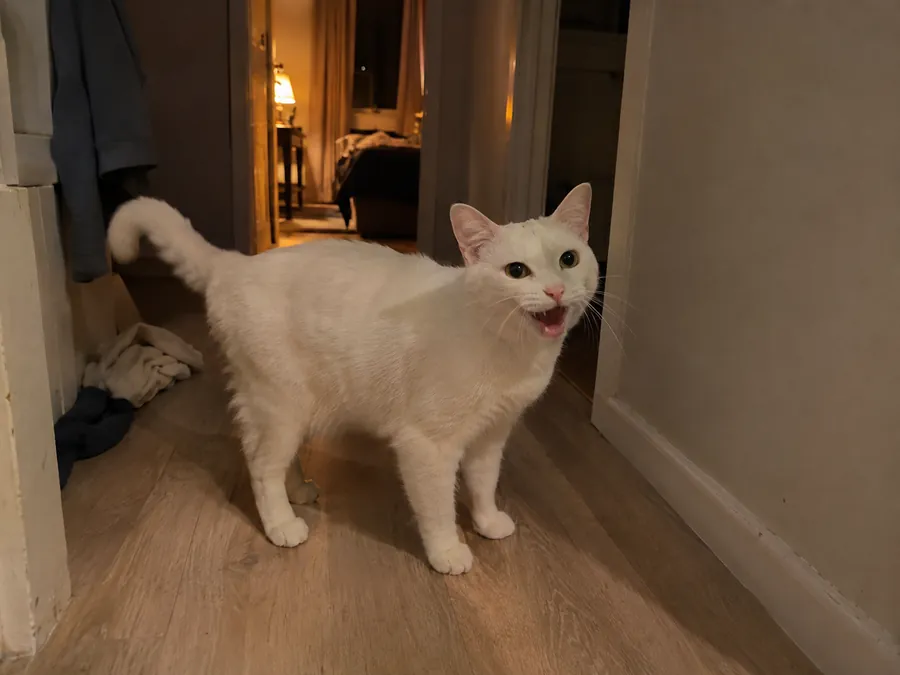
Cats meow at night mostly because their natural schedule peaks at dawn and dusk, and a bored or hungry indoor cat tends to use that energy on you. Younger cats are usually after play, food or company. In older cats, new night crying can also point to confusion or a medical problem, so a sudden change is worth a vet visit.
Below: why the night shift happens, how to tell the causes apart, a step-by-step plan for quieter nights, and the signs that mean it is time to call the vet.
Cats are not nocturnal, they are crepuscular
Many people assume cats are nocturnal. VCA explains that cats are crepuscular: they are more alert around dawn and dusk, when their chances of catching prey are highest. Cats Protection says the same, that cats are naturally more active at dawn and dusk.
That means an early-morning or late-evening burst of energy is normal. It becomes a problem when it lands in the middle of your sleep. VCA adds that house cats often adjust their schedules around their owners, and that persistent night activity is often due to boredom or attention-seeking behavior.
Common reasons a cat meows at night
Boredom and stored-up energy
A cat who naps all day while you are at work has a lot to burn at night. Without play, hunting and climbing, the energy comes out as running, knocking things over and meowing.
Hunger and a learned routine
If you have ever fed her at 4 a.m. to make the noise stop, she took note. Cats learn quickly that waking you leads to food, and every time it works the habit gets stronger.
Wanting company
Some cats are awake at night and simply want you. Meowing at the bedroom door, jumping on the bed and walking across your face are all versions of “get up and play.”
Heat cycles and intact cats
VCA notes that cats in estrus are particularly vocal when calling, and that neutering should reduce this. If your cat is not spayed or neutered, that may be the whole story. Our article on why cats yowl covers the louder end of this.
Age-related confusion
Cornell describes signs of cognitive dysfunction, which usually become clearly noticeable in cats ten years or older, including seemingly unprompted episodes of loud vocalizing, frequently in the middle of the night. International Cat Care lists changes in sleep-wake cycles, with cats being awake or restless when they should be resting, among the signs.
An overactive thyroid and other conditions
VCA says it is common for hyperthyroid cats to show increased vocalizing, particularly at night. The typical hyperthyroid cat is middle-aged or older, with an average age of about 12 years, and the most common sign is weight loss despite an increased appetite. International Cat Care notes that other conditions, including chronic kidney disease, arthritis pain and high blood pressure, can cause similar behavior changes, which is why a vet needs to rule them out first.
How to tell whether it is behavior or health
A few questions help sort the two:
- How old is she? A two-year-old who has always been lively at night is probably a behavior case. A twelve-year-old who just started is a reason to book an exam.
- Is it new? Cats whose night routines changed recently, especially with other changes like weight loss or more drinking, need a vet.
- Does she calm down when you respond? A cat who is satisfied by food or play usually wants exactly that. A cat who keeps crying, paces or seems disoriented may be dealing with something else.
- Does the sound change? A yowl that sounds distressed is different from a conversational meow.
What to do for quieter nights
Move the fun to the evening
Cats Protection recommends several short interactive play sessions during the day to use up energy. Make the last one right before bed: five to ten minutes with a wand toy, ending with her catching the “prey.” Then feed a meal. A full, tired cat is more likely to sleep.
Reset the meal schedule
VCA says that for cats who vocalize through the night, it is first necessary to try to reschedule the cat. A stimulating daytime routine with regular meals, social play and exploratory toys helps. Cats Protection suggests feeding enrichment toys at night, which provide food in other ways compared to a standard food bowl, so she has something to do besides wake you.
An automatic feeder set for early morning also breaks the link between your waking up and her breakfast.
Do not reward the night calls
Resist feeding, petting or talking to her when she cries. Even a “shh” can count as attention. It is hard, and the first nights can be worse. VCA calls this an extinction burst: when a reward is removed, the behavior may first become more intense before it fades. If you give in during that stage, you teach her to cry longer.
Consider closing the bedroom door
VCA lists locking the cat out of the bedroom as one option. If you try it, give her a comfortable bed, water and a litter box outside, and use earplugs for the first few nights if you need to. A cat who has slept in your room for years will protest.
Add daytime stimulation
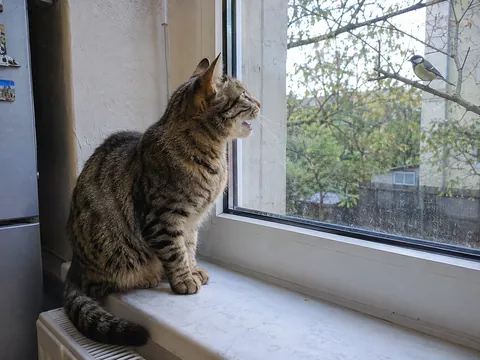
Window perches, a bird feeder outside a window, puzzle feeders and cat-safe scratching spots help fill the day. A free laser game in your browser can be a short activity on days when you cannot be there, though it does not replace play with you.
Make a senior cat’s night easier
International Cat Care suggests a night light to help older cats find their way and cope with confusion overnight. Keep food, water and a litter box on one level, and avoid moving furniture.
When to call your vet
Book a visit promptly if:
- Night crying is new, especially in a cat who is around ten or older
- She loses weight but seems hungry all the time
- She drinks or urinates more, or has litter box accidents
- She seems confused, stares at walls or gets lost in familiar rooms
- She paces, seems restless, or cries in a way that sounds distressed
- She is eating less or hiding
These signs are not a diagnosis, and many are treatable. Your vet can run the right checks and tell you what is going on.
The short version
Night meowing is usually a mix of natural dawn-and-dusk activity, boredom and a habit that got rewarded. More play, a later meal and a calm refusal to respond usually fix it within a couple of weeks. If it is new, loud or comes with other changes, especially in an older cat, get it checked. For the daytime version of the same problem, see why your cat is meowing so much.
Sources
- VCA Animal Hospitals — True or False: Cats Are Nocturnal
- VCA Animal Hospitals — Cat Behavior Problems: Vocalization
- Cats Protection — Why does my cat want to play at bedtime?
- Cornell Feline Health Center — Cognitive Dysfunction
- International Cat Care — Cognitive dysfunction syndrome (senility, dementia) in cats
- VCA Animal Hospitals — Hyperthyroidism in Cats
Cat Translator is an entertainment app. This article is general information, not veterinary advice. If your cat's behavior changes suddenly, talk to your vet.