Why is my cat yowling?
Why is my cat yowling? Heat cycles, stress, pain, aging and illness can all cause that long, loud cry. Learn how to tell them apart and when to see a vet.
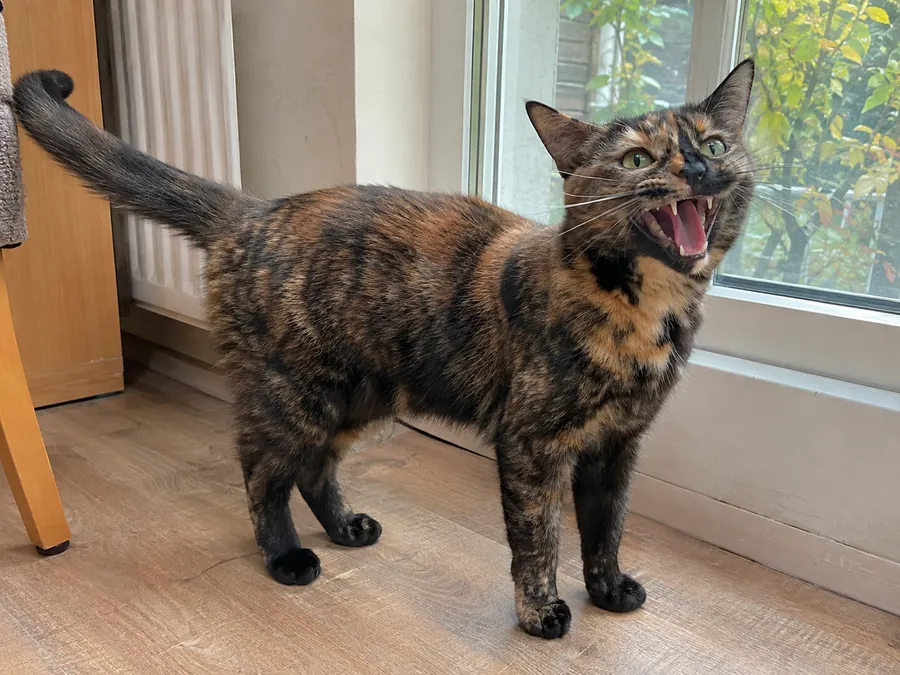
A cat yowls because she is calling out, and the cause is usually one of four things: a heat cycle or the presence of a cat in heat, stress or conflict, confusion in an older cat, or pain and illness. Unlike an ordinary meow, a yowl is long, loud and hard to ignore. If it is new, unusually intense or comes with other changes, call your vet before trying behavior fixes.
This guide explains what a yowl is, the main causes, what you can do at home, and which signs mean a vet visit.
What a yowl is, and how it differs from a meow
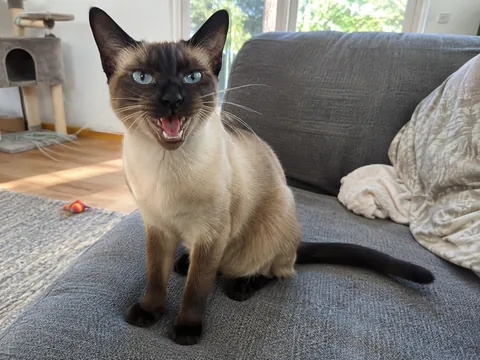
A meow is short and mostly aimed at people. A yowl is a long, drawn-out cry, usually louder and lower, sometimes rising and falling. Owners often describe it as howling or caterwauling.
International Cat Care groups yowls with growls, snarls, hisses and shrieks as hostile sounds. That fits one common situation, such as two cats facing off. But yowling has other triggers too, and which one applies depends on the context.
Common reasons a cat yowls
Heat cycles and intact cats
This is the textbook cause. VCA says cats in estrus are particularly vocal at “calling.” Females in heat can yowl for days and roll or crouch. Intact males may yowl when they sense a female in heat nearby, often at a window or door.
VCA recommends spaying females before their first heat and neutering males at an early age. ASPCA likewise says spaying is the best way to reduce meowing caused by the heat cycle, and that neutering is the best way to reduce it in an intact male.
Stress, fear or conflict
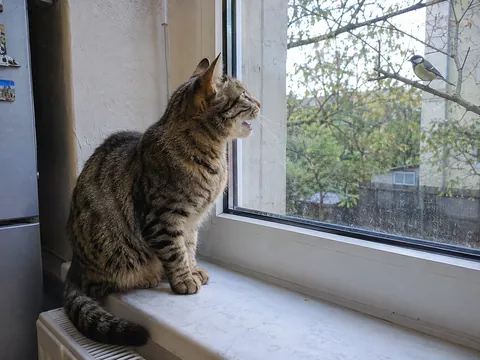
New pets, strangers, a stray cat outside the window, a move or a car ride can all bring on yowling. A cat who yowls when another cat walks by is saying “stay away.” If a yowling cat is crouched, flattened or hissing, give her space.
Wanting something
Some cats yowl to get attention, food or access to a room. If it works, she will repeat it. VCA lists attention-getting behavior among the most common reasons for vocalizing, and ASPCA reminds owners that cats keep meowing because it works. Check the basics first: food, water, a clean litter box and a way to get where she wants to be.
Age-related confusion
Cornell describes cognitive dysfunction in older cats as including seemingly unprompted episodes of loud vocalizing, frequently in the middle of the night, with behavior signs that tend to become clearly noticeable in cats aged ten or older. VCA says some aged cats caterwaul, often at odd hours, especially if they have hearing or vision loss.
Pain or illness
VCA says cats in pain will often make noise, and gives stomach trouble, arthritis and injuries as examples. It also notes that cats with systemic medical problems, such as thyroid disease or kidney malfunction, may howl, and that kidney problems can be linked to high blood pressure.
Quick guide: what is she yowling about?
| Clue | Possible cause |
|---|---|
| Not spayed or neutered, restless, rolling, rubbing | Heat cycle or a cat in heat nearby |
| Another cat, a stranger or a noise just appeared | Stress or conflict |
| Meets you at the bowl, the door or your bed | Wants something |
| Older cat, awake and calling at night, disoriented | Age-related confusion |
| Yowls when touched, walks stiffly, hides | Pain |
| Weight loss, thirst, appetite changes | Illness |
This table is a starting point, not a diagnosis. If you are unsure, your vet can help sort it out.
What to do at home
Rule out the basics
Check food, water, litter box and whether she is shut out of somewhere. ASPCA advises making sure her needs are met before assuming she is demanding.
Get a vet exam first for anything new
VCA is direct: if your cat begins making strange noises, start with a visit to your veterinarian to rule out medical problems. It adds that even if your cat sees the vet regularly, you should take her in as soon as you notice behavior changes.
Spay or neuter if she is not already
For heat-related yowling this is the lasting fix. Ask your vet about timing.
Reduce triggers
If a stray cat outside sets her off, close the blinds or block the view of the window she watches. Give a stressed cat a quiet room with a bed, a hiding spot and a litter box. Use plug-in or other calming aids only after talking to your vet.
Add daytime play and routine
A predictable day helps. Regular mealtimes, a couple of play sessions and things to look at keep many cats calmer in the evening. Our article on why cats meow at night has a full night routine you can adapt.
Do not punish
Scolding or hitting does not stop yowling and may make her afraid of you, according to ASPCA.
Help for an older cat who yowls at night
- Keep food, water and a litter box close to where she sleeps.
- Leave a dim night light on so she can see her way, which International Cat Care suggests for cats with cognitive dysfunction.
- Keep furniture in the same place.
- Keep her routine steady.
- See your vet. Because cognitive dysfunction is diagnosed after other conditions such as hyperthyroidism and kidney disease have been ruled out, Cornell stresses these checks come first.
When to call your vet
Contact your vet soon, and urgently if your cat is also straining to urinate, if:
- Yowling is new or suddenly more intense
- She cries while using the litter box or strains with little result
- She is eating, drinking or urinating differently
- She has lost weight, is restless, or seems confused
- She hides, limps or reacts when touched
- She is an older cat who has started to call out at night
Do not try medications or supplements from the internet. Your vet can check for pain, thyroid, kidney and blood pressure problems and talk through options.
The takeaway
A yowl is a strong signal. In a cat who is not spayed or neutered, it is most likely heat-related. In a stressed cat, it is a warning. In an older cat, it may be confusion or illness. For a cat who is just chatty, see why your cat is meowing so much, and for a quick guide to different sounds, read our cat meow meanings page.
Sources
- VCA Animal Hospitals — Caterwauling in Cats
- VCA Animal Hospitals — Cat Behavior Problems: Vocalization
- ASPCA — Meowing and Yowling
- Cornell Feline Health Center — Cognitive Dysfunction
- International Cat Care — Cat Communication
- International Cat Care — Cognitive dysfunction syndrome (senility, dementia) in cats
Cat Translator is an entertainment app. This article is general information, not veterinary advice. If your cat's behavior changes suddenly, talk to your vet.